Why Is Blepharoplasty Cheap in Turkey? 7 Economic Reasons Behind the Price Gap
Blepharoplasty in Turkey costs $1,500–$3,500 USD all-inclusive — 60–80% less than the US, UK, or Europe. The price difference is not about cutting corners. It's driven by measurable economic factors: lower operating costs, favourable exchange rates, government investment, and surgical volume that Western clinics simply cannot match.
7 Economic Reasons
All-Inclusive from $1,500
Why Is Blepharoplasty So Affordable in Turkey Without Compromising Quality?
Blepharoplasty is cheap in Turkey because of 7 economic factors: 60–70% lower operating costs, medical salaries reflecting Turkey's cost of living, favourable USD/EUR/GBP-to-TRY exchange rates, $2B+ government health tourism investment, high surgical volume creating economies of scale, lower medical indemnity insurance, and an all-inclusive pricing model that eliminates hidden costs. Quality is identical — Turkey has 46 JCI-accredited hospitals and ISAPS-certified surgeons.
Why is blepharoplasty cheap in Turkey? This question reflects a natural — and healthy — scepticism. When a procedure costs $1,500–$3,500 all-inclusive in Istanbul versus $6,000–$15,000+ in New York or £4,000–£10,000+ in London, the instinct is to assume something must be sacrificed. But the data tells a different story. Turkey's cost advantage is driven entirely by macroeconomic factors — not by inferior surgeons, substandard hospitals, or shortcuts in patient care.
According to the International Society of Aesthetic Plastic Surgery (ISAPS), Turkey ranks among the world's top 5 destinations for aesthetic procedures, performing over 1.2 million surgeries annually. The country has 46 JCI-accredited hospitals — the same international gold standard held by the Mayo Clinic, Cleveland Clinic, and Johns Hopkins in the United States. Turkish plastic surgeons complete 11+ years of medical training, including 6 years of medical school and 5+ years of specialised residency in plastic, reconstructive, and aesthetic surgery.
At Plastic Surgery Istanbul, Prof. Dr. Mehmet Kaan Uçar personally performs every blepharoplasty. With 20+ years of experience and over 10,000 successful aesthetic procedures, his surgical volume exceeds that of most Western surgeons. His ISAPS membership provides independent international verification — the same credentialing body that certifies surgeons on Beverly Hills' Rodeo Drive and London's Harley Street.
Below, we break down the 7 specific economic factors that explain Turkey's price advantage — with data, comparisons, and evidence that the quality gap between Istanbul and Western capitals simply doesn't exist.
Reason #1: Operating Costs Are 60–70% Lower Than Western Nations
Hospital operating room costs, facility overhead, and administrative expenses in Istanbul are 60–70% lower than in New York, London, or Zurich. Turkish hospitals use identical medical equipment — Carl Zeiss microscopes, Dräger anaesthesia machines, Ethicon sutures — but pay a fraction of the real estate, utility, and staffing costs.
The single largest factor behind Turkey's affordable blepharoplasty pricing is operating cost differential. Running a state-of-the-art surgical facility in Istanbul costs 60–70% less than an equivalent facility in Manhattan, Central London, or Zurich. This isn't about inferior equipment — Turkish JCI-accredited hospitals use identical surgical technology: Carl Zeiss magnification systems, Dräger anaesthesia machines, Valleylab electrosurgical units, and Ethicon microsurgical sutures. The savings come from the real estate, utilities, administrative staff, and overhead that surround the operating room.
Consider the numbers: commercial real estate in Manhattan's Upper East Side (where top plastic surgeons operate) costs $150–$250 per square foot annually. In Istanbul's premium medical districts — Nişantaşı, Şişli, Levent — equivalent space costs $25–$45 per square foot. That's a 75–85% reduction in one of the largest fixed costs of running a surgical practice. Utilities, building maintenance, and property taxes follow the same pattern. These savings cascade through every aspect of the patient bill — not because the hospital is inferior, but because Istanbul's economy is simply less expensive to operate in.
The JCI accreditation (Joint Commission International) ensures that this cost advantage doesn't translate to quality compromise. JCI evaluates 1,200+ measurable criteria across patient safety, infection control, surgical protocols, anaesthesia standards, and clinical governance. A JCI-accredited hospital in Istanbul meets identical standards to one in Boston or Berlin. Turkey's 46 JCI-accredited hospitals represent one of the highest concentrations globally — more than the UK (8), Canada (5), or Australia (3).
Reason #2: Medical Salaries Reflect Turkey's Cost of Living
A board-certified plastic surgeon in the US earns $400,000–$600,000+ annually. In Turkey, equally qualified surgeons earn $80,000–$150,000 — reflecting Turkey's lower cost of living, not inferior skills. Turkish surgeons complete 11+ years of training and many hold international certifications (ISAPS, EBOPRAS).
A board-certified plastic surgeon in the United States earns $400,000–$600,000+ annually — some Beverly Hills practices generate $1M+. In the UK, consultant plastic surgeons earn £150,000–£300,000+. In Germany, €200,000–€400,000+. These salaries are embedded directly in patient pricing — when your surgeon earns $500,000/year, every procedure must carry a proportional share of that cost.
In Turkey, a board-certified plastic surgeon with equivalent qualifications earns $80,000–$150,000 annually. Prof. Dr. Mehmet Kaan Uçar's 20+ years of experience and 10,000+ procedures represent a surgical track record that most Western surgeons cannot match in volume — yet his compensation reflects Istanbul's cost of living, not his skill level. Turkey's cost of living is approximately 60–65% lower than New York City, 55–60% lower than London, and 50–55% lower than Berlin (according to Numbeo 2026 data).
This salary differential means Turkish surgeons can charge significantly less per procedure while maintaining an excellent quality of life. It's the same economic principle that makes software development in Eastern Europe or manufacturing in East Asia more affordable — local economics determine pricing, not professional competence. Prof. Dr. Uçar's ISAPS membership confirms his credentials meet the highest international standards, regardless of the economic environment he practices in.
Reason #3: Currency Exchange Rates Work Dramatically in Your Favour
The USD, GBP, and EUR are exceptionally strong against the Turkish Lira. $1 USD buys approximately 38 TRY, £1 GBP buys 48 TRY, €1 EUR buys 37 TRY. While surgical equipment is priced internationally, labour, accommodation, and facility costs are in Lira — making your money stretch 3–5x further in Istanbul.
The Turkish Lira's position against major Western currencies creates a powerful natural cost advantage for international patients. At current 2026 exchange rates: $1 USD ≈ 38 TRY, £1 GBP ≈ 48 TRY, €1 EUR ≈ 37 TRY. This means that while surgical equipment and materials (manufactured by Carl Zeiss, Ethicon, Dräger) are priced in USD or EUR — ensuring identical quality — labour, accommodation, facility costs, and services are denominated in Turkish Lira.
For a practical example: your 5-star hotel stay (2–4 nights, included in the all-inclusive package) costs the clinic approximately $50–$80/night at wholesale rates — a room that would cost $300–$600/night in Manhattan or Mayfair. Your VIP airport transfer in a Mercedes-Benz luxury vehicle costs approximately $40–$60 — a comparable service in New York would be $150–$250. These savings accumulate across every service component, allowing Turkey to offer genuinely premium experiences at a fraction of Western costs.
Importantly, this currency advantage is structural, not temporary. Turkey's economic position as a major emerging market with a large, young workforce ensures that the cost-of-living differential will persist. For US, UK, and European patients, this creates a sustained price advantage that makes Turkey consistently more affordable than domestic options — year after year.
Reason #4: $2 Billion+ Government Health Tourism Investment
Turkey has invested over $2 billion in health tourism infrastructure since 2015 — including international patient centres, multilingual hospital departments, quality assurance programs, and marketing subsidies. Health tourism generated $2.6 billion in revenue in 2025, treating 1.5+ million international patients. This government support enables competitive pricing.
Turkey's government has identified health tourism as a strategic national priority, investing over $2 billion since 2015 in infrastructure, regulation, and international promotion. This isn't incidental support — it's a deliberate economic strategy. Turkey's Ministry of Health International Health Services Department oversees quality standards, accreditation requirements, and patient protection regulations specifically for international patients.
The investment has produced measurable results: Turkey's health tourism revenue reached $2.6 billion in 2025, treating over 1.5 million international patients. The country ranks 4th globally in health tourism volume, behind only the United States, Germany, and Thailand. This government commitment means that clinics serving international patients receive institutional support — from subsidised marketing to streamlined visa processes to standardised quality frameworks — that reduces operational costs and enables competitive pricing.
For blepharoplasty patients specifically, this means: multilingual hospital staff (English, German, French, Spanish, Arabic speakers available at major hospitals), dedicated international patient coordinators, standardised complaint resolution processes, and government-regulated quality audits. The system is designed to make Turkey as accessible and safe as any Western healthcare system — while maintaining the natural cost advantages of the Turkish economy.
Reason #5: 1.2 Million Annual Procedures Create Economies of Scale
Turkey performs over 1.2 million aesthetic procedures annually — ranking among the world's top 3 countries. This massive volume creates economies of scale: bulk purchasing of surgical supplies, optimised OR schedules, streamlined coordination, and refined techniques through repetition. Prof. Dr. Uçar's 10,000+ procedures represent maximum efficiency.
Volume drives efficiency — a fundamental economic principle that applies directly to surgical pricing. Turkey performs over 1.2 million aesthetic procedures annually, ranking among the world's top 3 countries by volume (alongside the US and Brazil). This concentration of surgical activity creates economies of scale that individual Western practices simply cannot achieve.
At the hospital level, high volume means: bulk purchasing agreements with medical supply manufacturers (saving 20–40% on sutures, implants, medications, and disposables), optimised operating room scheduling (maximising utilisation of expensive surgical suites), and standardised patient coordination systems that reduce administrative overhead per case. At Plastic Surgery Istanbul, these institutional efficiencies translate directly to lower patient costs.
At the surgeon level, Prof. Dr. Uçar's 10,000+ procedures represent an extraordinary level of surgical refinement. Research consistently shows that surgeon volume correlates with better outcomes and greater efficiency. High-volume surgeons complete procedures faster (without rushing), encounter fewer complications, and manage the full patient journey with maximum efficiency. This expertise means Prof. Dr. Uçar can deliver exceptional results in 45–60 minutes for upper blepharoplasty and 90–120 minutes for combined — optimal efficiency that benefits both patient outcomes and cost structure.
Reason #6: Lower Medical Indemnity Insurance Premiums
US plastic surgeons pay $30,000–$100,000+ annually in malpractice insurance. UK surgeons pay £20,000–£60,000+. Turkish surgeons pay significantly less — $5,000–$15,000 — due to a different legal framework. These premium savings are passed directly to patients without reducing accountability or oversight.
Medical malpractice insurance is one of the largest hidden costs embedded in Western surgical pricing — particularly in the United States. American plastic surgeons pay $30,000–$100,000+ annually in malpractice premiums, depending on state and procedure type. In high-litigation states like New York, California, and Florida, premiums can exceed $150,000/year. These costs are divided across every procedure performed — adding $500–$2,000 to each patient's bill.
In the UK, medical indemnity premiums for cosmetic surgeons range from £20,000–£60,000+ annually. In Germany, €15,000–€50,000+. In Switzerland, even higher. These premiums reflect the litigation culture and legal frameworks of each country — not the actual complication rates, which are comparable globally for board-certified surgeons.
In Turkey, medical indemnity insurance premiums are $5,000–$15,000 annually — reflecting a different legal framework that still provides patient recourse through the Turkish Medical Association and Ministry of Health complaint procedures, but without the punitive damages culture that inflates Western insurance costs. Prof. Dr. Uçar operates under full professional oversight — including ISAPS ethical standards, Turkish Medical Association regulations, and hospital credentialing requirements — ensuring accountability without the insurance-driven cost inflation that burdens Western patients.
Reason #7: The All-Inclusive Model Eliminates Administrative Waste
Turkey's all-inclusive pricing model bundles surgeon, hospital, anaesthesia, hotel, transfers, and follow-up into one transparent price. This eliminates the billing complexity, insurance processing, and administrative overhead that adds 15–25% to Western surgical costs. One price, confirmed in writing, zero hidden fees.
The final economic factor is Turkey's all-inclusive pricing model — a structural innovation that eliminates the administrative waste embedded in Western healthcare billing. In the US, a single blepharoplasty generates 5–8 separate invoices: surgeon, anaesthesiologist, facility, pathology lab, pharmacy, follow-up consultations, and insurance processing. Each invoice requires its own billing department, coding specialists, insurance negotiations, and collection processes. Studies estimate that administrative costs account for 15–25% of total US healthcare spending.
Turkey's all-inclusive model consolidates everything into one transparent price: surgeon fee, JCI-accredited hospital, anaesthesia, pre-operative tests, all medications, aftercare supplies, 5-star hotel accommodation (2–4 nights), VIP airport transfers, multilingual patient coordinator, and 12-month virtual follow-up. This single-price model eliminates billing departments, insurance processing, coding specialists, and collections — savings that flow directly to the patient.
At Plastic Surgery Istanbul, the quoted price is confirmed in writing before you travel. There are no surprise facility fees, no unexpected anaesthesia charges, no follow-up consultation bills. The only cost not included is your airfare (which you book directly). This transparency isn't just convenient — it's economically efficient. By eliminating administrative overhead, Turkey can offer premium medical experiences at prices that Western hospitals cannot match even if they wanted to.
See Your Exact All-Inclusive Price
Submit your photos and receive a personalised blepharoplasty quote from Prof. Dr. Uçar within 24 hours — transparent pricing, zero hidden costs.
The Quality Evidence: Why Cheap Doesn't Mean Inferior
Turkey's blepharoplasty quality matches Western standards by every measurable metric: 46 JCI-accredited hospitals, ISAPS-certified surgeons, EU-standard CE-marked equipment, complication rates under 1% (below international averages), and 11+ years of surgeon training. The price difference reflects economics, not quality.
46 JCI-Accredited Hospitals
JCI accreditation evaluates 1,200+ criteria across patient safety, infection control, surgical protocols, and clinical governance. Turkey's 46 JCI-accredited hospitals exceed the UK (8), Canada (5), and Australia (3). Your blepharoplasty takes place in a facility that meets identical standards to the world's most prestigious hospitals — Mayo Clinic, Cleveland Clinic, Johns Hopkins.
ISAPS-Certified Surgeons with 11+ Years Training
Turkish plastic surgeons complete 6 years of medical school and 5+ years of specialised residency — comparable to US (4+6 years) and UK (5+8 years) pathways. Prof. Dr. Uçar's ISAPS membership requires verified training, documented outcomes, ongoing education, and ethical compliance — the same standard applied to surgeons worldwide.
EU-Standard CE-Marked Equipment
Medical devices sold in Turkey must meet CE marking requirements — the European conformity standard required across all 27 EU member states. Turkish hospitals use Carl Zeiss microscopes, Dräger anaesthesia machines, Storz endoscopic systems, and Ethicon sutures — identical equipment to any Western operating room.
Complication Rate Under 1%
Prof. Dr. Uçar's blepharoplasty complication rate is under 1% — below the international average of 1–2% reported by ISAPS. His 10,000+ procedures provide a statistically significant dataset confirming consistent, high-quality outcomes that match or exceed Western benchmarks.
Complete Cost Comparison: Turkey vs US vs UK vs Europe
Upper blepharoplasty: Turkey $1,500–$2,000 all-inclusive vs US $4,000–$8,000, UK £2,500–£5,500, Europe €3,000–€7,000. Combined: Turkey $2,200–$3,200 vs US $7,000–$14,000, UK £5,000–£10,000, Europe €5,500–€12,000. Turkey saves 60–80% across all procedure types.
| Procedure | Turkey | US | UK | Europe | Savings |
|---|---|---|---|---|---|
| Upper Blepharoplasty | $1,500–$2,000 | $4,000–$8,000 | £2,500–£5,500 | €3,000–€7,000 | 60–75% |
| Lower Blepharoplasty | $1,800–$2,500 | $5,000–$10,000 | £3,500–£7,000 | €4,000–€8,500 | 64–75% |
| Combined Upper + Lower | $2,200–$3,200 | $7,000–$14,000 | £5,000–£10,000 | €5,500–€12,000 | 69–77% |
| Full Eye Rejuvenation + Brow Lift | $3,500–$5,500 | $12,000–$25,000+ | £8,000–£18,000+ | €10,000–€20,000+ | 71–80% |
Your Surgeon: Prof. Dr. Mehmet Kaan Uçar
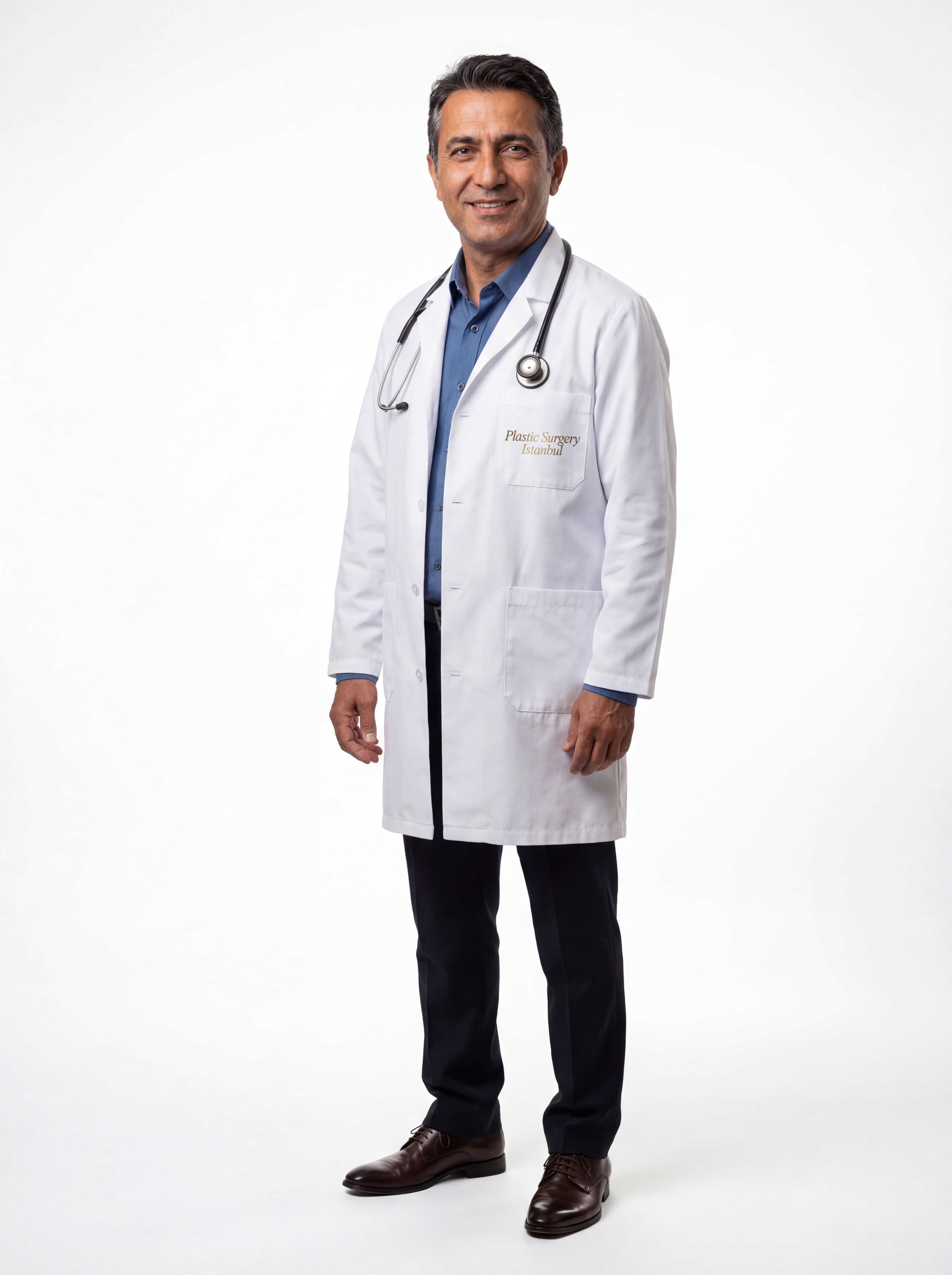
Understanding why blepharoplasty is cheap in Turkey requires seeing the surgeon behind the price. Prof. Dr. Mehmet Kaan Uçar represents exactly why Turkey's affordable pricing doesn't compromise quality — a world-class surgeon with 20+ years of experience and 10,000+ successful procedures, practising in a JCI-accredited facility, at a price point that reflects Istanbul's economy rather than New York's or London's.
His ISAPS membership places him in the same credentialing framework as surgeons at Beverly Hills' most exclusive practices and London's Harley Street clinics. The difference? His fees reflect Turkey's cost of living — not his skill level. Patients receive identical surgical expertise at 60–80% lower cost.
Prof. Dr. Uçar's blepharoplasty technique emphasises microsurgical precision: magnification instruments, ultra-fine absorbable sutures, and fat transposition rather than removal — preserving orbital volume for a natural, youthful result. His complication rate of under 1% and recovery protocol allowing social activities within 7–10 days demonstrate that affordability and excellence are not mutually exclusive.
- 20+ years of surgical experience
- 10,000+ aesthetic procedures performed
- ISAPS Member — International Society of Aesthetic Plastic Surgery
- Board-certified in Plastic, Reconstructive & Aesthetic Surgery
- Microsurgical blepharoplasty specialist
- Performs every procedure personally — zero delegation
Your Journey: Affordable Blepharoplasty Without Compromise
5-step process: (1) Free online consultation with photo analysis and exact pricing, (2) Travel coordination with personal multilingual coordinator, (3) Pre-operative assessment at JCI hospital, (4) Surgery by Prof. Dr. Uçar at JCI-accredited facility, (5) Recovery and 12-month virtual follow-up program.
Free Online Consultation & Transparent Pricing
Submit your photos and medical history through our secure portal. Prof. Dr. Uçar personally reviews your case within 24 hours. You receive a detailed surgical plan with your exact all-inclusive price — confirmed in writing. Free, no obligation, no hidden costs. This is what affordable transparency looks like.
Travel Planning with Personal Coordinator
Your dedicated English-speaking coordinator handles everything: optimal travel dates, flight recommendations, 5-star hotel booking, and a detailed daily itinerary. A 50% deposit secures your booking. Coordinator available 24/7 via WhatsApp, email, or phone.
Istanbul Arrival & Pre-Operative Assessment
VIP driver meets you at Istanbul Airport. Next morning: comprehensive testing (blood work, ECG, eye examination) at a JCI-accredited hospital, face-to-face consultation with Prof. Dr. Uçar, and detailed surgical planning. Every question answered before proceeding.
Surgery at JCI-Accredited Hospital
Prof. Dr. Uçar performs your blepharoplasty using microsurgical techniques. Upper: 45–60 minutes. Combined: 90–120 minutes. The same equipment, sterilisation standards, and safety protocols as any Western hospital — at a fraction of the cost. Recovery monitoring before returning to your 5-star hotel.
Recovery & 12-Month Follow-Up
Recover in your luxury hotel with 24/7 medical support on call. Final examination before your flight home. After returning: 12-month virtual follow-up program with video consultations at 1 week, 1 month, 3 months, 6 months, and 12 months. Complete continuity of care — included in your all-inclusive price.
Why Is Blepharoplasty Cheap in Turkey: FAQ
Seven economic factors: 60–70% lower operating costs, medical salaries reflecting Turkey's cost of living, favourable currency exchange (USD to TRY), $2B+ government health tourism investment, high surgical volume (1.2M+ procedures/year), lower medical insurance premiums, and an all-inclusive pricing model eliminating administrative waste. Quality is identical — 46 JCI-accredited hospitals and ISAPS-certified surgeons.
Get Your Free Blepharoplasty Quote
Submit your photos and receive a personalised quote from Prof. Dr. Uçar within 24 hours. Exact all-inclusive pricing — zero hidden costs.