Revision Blepharoplasty Turkey: Corrective Eyelid Surgery Cost, Results & Expert Surgeons
Revision blepharoplasty in Turkey corrects unsatisfactory results from previous eyelid surgery — restoring natural contour, symmetry, and function — at 65–80% less than US pricing. All-inclusive packages from $2,500 at JCI-accredited hospitals with ISAPS-certified surgeons specializing in secondary eyelid procedures.
From $2,500
All-Inclusive Package
What Is Revision Blepharoplasty and Why Choose Turkey?
Revision blepharoplasty is a secondary corrective eyelid surgery performed to fix unsatisfactory results from a previous blepharoplasty — including asymmetry, over-resection, hollow eyes, ectropion, or persistent excess skin. Turkey has become a leading global destination for revision blepharoplasty because Istanbul's top surgeons combine advanced reconstructive techniques with dramatically lower costs — delivering results that rival or exceed top US academic centers at 65–80% savings.
Revision blepharoplasty in Turkey addresses one of the most challenging problems in facial plastic surgery: correcting the complications and aesthetic failures of a previous eyelid procedure. Unlike primary blepharoplasty — which works on untouched anatomy — revision surgery must navigate scar tissue, altered tissue planes, and compromised blood supply. This demands a surgeon with exceptional technical skill, deep anatomical knowledge, and extensive experience in secondary eyelid procedures. For patients who have received unsatisfactory results elsewhere, Istanbul has emerged as a global hub for corrective eyelid surgery.
The demand for revision blepharoplasty is growing worldwide as the total volume of primary blepharoplasty increases. Studies from ISAPS show that 5–10% of blepharoplasty patients seek revision within five years — whether due to over-resection (hollowed-out appearance), under-correction (residual excess skin), asymmetry, retraction, ectropion, or functional impairment. Many of these patients discover that the original surgeon lacks the specialized skills needed for revision work, which is technically far more demanding than the initial procedure.
At Plastic Surgery Istanbul, our lead surgeon Prof. Dr. Mehmet Kaan Uçar brings over 20 years of periorbital and facial surgery expertise with active ISAPS membership — placing him in the global top 5% of plastic surgeons. His revision blepharoplasty practice draws patients from across the United States, Europe, and the Middle East — many referred by other surgeons who recognize the complexity of secondary eyelid work. All-inclusive packages start from $2,500 — covering the procedure, JCI hospital, 5-star hotel in Nişantaşı, VIP airport transfers, and 12-month structured aftercare.
Need Corrective Eyelid Surgery?
Free detailed assessment by Prof. Dr. Uçar — personalized revision plan, realistic expectations, and exact pricing for your case.
How Revision Blepharoplasty Works: Correcting Previous Eyelid Surgery
Revision blepharoplasty works by carefully analyzing the specific problems from the previous surgery — scar tissue, tissue deficiency, malposition, or asymmetry — and applying targeted corrective techniques. This may include scar revision, skin grafting, fat grafting to restore volume, canthoplasty for support, or cartilage grafts to correct retraction. Each revision plan is uniquely designed based on the individual patient's anatomy and prior surgical changes.
Comprehensive Problem Analysis
Every revision blepharoplasty begins with a detailed assessment of what went wrong. Prof. Dr. Uçar evaluates the previous surgical approach, identifies scar tissue planes, measures lid position and symmetry, assesses remaining tissue reserves, and tests eyelid function including snap-back test and distraction test. This analysis determines whether the correction requires tissue addition, repositioning, or structural reinforcement.
Scar Tissue Management
Previous surgery creates scar tissue that alters normal tissue planes, restricts mobility, and complicates dissection. In revision blepharoplasty, the surgeon must carefully release scar contractures without damaging underlying structures — particularly the levator muscle (which opens the eye) and the orbital septum. This meticulous scar management is what makes revision surgery significantly more technically demanding than primary procedures.
Volume Restoration Techniques
Over-resection of fat or skin during the first surgery is the most common reason for revision. The hollowed, skeletonized appearance requires volume restoration — typically through fat grafting (lipofilling), dermal-fat grafts, or filler placement. Prof. Dr. Uçar prefers autologous fat transfer using micro-cannulas for permanent, natural-looking volume restoration that ages gracefully.
Structural Support Reconstruction
When previous surgery has weakened the eyelid's structural integrity — causing retraction, ectropion (outward turning), or poor lid closure — revision blepharoplasty must reconstruct the support system. This may involve canthoplasty (tightening the outer corner), spacer grafts (cartilage or dermis to lengthen the posterior lamella), or midface lifting to restore the lid-cheek junction.
Symmetry Correction
Asymmetric results are among the most distressing outcomes of primary blepharoplasty. Revision surgery addresses asymmetry through precise, often millimeter-level adjustments — matching lid height, crease position, fat distribution, and contour between both eyes. This requires exceptional surgical judgment and experience with secondary anatomy.
Who Needs Revision Blepharoplasty? Common Indications
Candidates for revision blepharoplasty include patients with: over-resected tissue causing hollow eyes, asymmetric eyelid creases or contours, ectropion or eyelid retraction from excessive skin removal, persistent excess skin from under-correction, visible scarring, difficulty closing eyes completely, and chronic dryness from altered lid position. Most patients should wait 6–12 months after primary surgery before seeking revision.
Over-Resection (Hollow, Skeletal Appearance)
The most common indication for revision blepharoplasty is aggressive tissue removal during the primary procedure. When too much skin, muscle, or fat is excised, the eyelids develop a hollowed, sunken appearance that looks prematurely aged. This 'over-done' look cannot be corrected without surgical revision — fillers provide only temporary improvement. Prof. Dr. Uçar uses micro-fat grafting and tissue redistribution to restore the natural fullness and youthful contour that was lost.
Eyelid Retraction and Ectropion
Eyelid retraction — where the lower lid pulls downward exposing the white below the iris (scleral show) — is a serious complication that can cause chronic dryness, tearing, and cosmetic distress. In severe cases, it progresses to ectropion (outward turning of the lid margin). Revision surgery addresses this through posterior lamellar grafting (using ear cartilage or hard palate tissue), canthoplasty to reinforce the outer corner, and midface elevation to support the lower lid.
Asymmetry Between Eyelids
Noticeable differences in crease height, lid opening, or contour between left and right eyes are common revision indications. Asymmetry may result from uneven tissue removal, different healing responses, or pre-existing differences that weren't addressed in the primary surgery. Revision targets the specific asymmetric elements — adjusting crease height, redistributing fat, or correcting muscle function — to achieve balanced, symmetrical results.
Under-Correction (Residual Excess)
When the primary surgery was too conservative — leaving noticeable excess skin, persistent wrinkles, or remaining fat pads — revision blepharoplasty completes the correction. Under-correction is generally easier to revise than over-correction because tissue is available for adjustment rather than requiring addition. Prof. Dr. Uçar takes a precise, measured approach to remove only the specific excess while preserving adequate tissue for natural function.
Functional Problems (Incomplete Closure, Dryness)
Some patients develop functional issues after primary blepharoplasty — inability to fully close the eyes (lagophthalmos), chronic dryness, excessive tearing, or a sensation of tightness. These problems often result from over-resection of anterior lamella (skin and muscle) and require revision surgery to restore adequate tissue for proper lid closure and comfortable eye function.
Revision Blepharoplasty Techniques Available in Turkey
Revision blepharoplasty techniques in Turkey include: (1) Fat grafting revision to restore lost volume, (2) Canthoplasty with posterior lamellar graft for retraction/ectropion, (3) Skin grafting for severe over-resection, (4) Scar revision with crease adjustment, and (5) Combined upper and lower revision for comprehensive correction.
Fat Grafting Revision Blepharoplasty
The gold standard for correcting the hollowed, over-resected appearance. Autologous fat is harvested from the abdomen or inner thigh using micro-cannulas, processed to concentrate viable adipocytes, and precisely injected into the periorbital region — filling the sunken upper lid sulcus, hollowed tear trough, and depleted lateral fat compartments. Prof. Dr. Uçar uses a layered micro-droplet technique for maximum fat survival (70–80% retention rate) and natural, lasting results.
Canthoplasty with Posterior Lamellar Graft
The definitive solution for lower eyelid retraction and ectropion. Canthoplasty tightens and repositions the lateral canthal tendon to provide structural support, while a posterior lamellar spacer graft (typically auricular cartilage from the ear or hard palate tissue) lengthens the shortened posterior lamella that is pulling the lid downward. This dual-component approach addresses both the mechanical cause and structural deficit simultaneously.
Full-Thickness Skin Grafting
For severe upper eyelid over-resection where insufficient skin prevents proper lid closure, a full-thickness skin graft from the contralateral upper lid, retroauricular area, or supraclavicular region provides the additional tissue needed. The graft is meticulously matched for color, texture, and thickness — then sutured into the deficient area with precise tension to restore natural lid drape and complete closure. Results mature over 6–12 months as the graft fully integrates.
Scar Revision with Crease Adjustment
Addresses visible scarring, malpositioned eyelid creases, or asymmetric crease heights from primary surgery. The previous scar is excised, adhesions are released, and the crease is re-established at the anatomically correct position using precise dermal-levator fixation sutures. For patients with multiple visible scars, this technique conceals the final incision within the natural crease line for an invisible result.
Combined Upper and Lower Revision
Comprehensive revision addressing both upper and lower eyelid problems simultaneously — the most common scenario for patients dissatisfied with full bilateral blepharoplasty results. This may combine fat grafting (upper lids), canthoplasty with spacer graft (lower lids), crease adjustment, and scar revision in a single session. Prof. Dr. Uçar's integrated approach ensures that upper and lower lid corrections complement each other for harmonious, balanced final results.
Revision Blepharoplasty Cost: Turkey vs. United States
Revision blepharoplasty in Turkey costs $2,500–$5,500 all-inclusive (procedure, JCI hospital, 5-star hotel, VIP transfers, aftercare). The same procedure in the US costs $6,000–$15,000 for the procedure alone — excluding facility fees, anesthesia, and recovery costs. Turkey offers 65–80% savings with equivalent or superior outcomes from revision-specialized surgeons.
Standard
$2,500
- Single-area revision (upper OR lower)
- JCI-accredited facility
- Local anesthesia with sedation
- 4-star hotel (3 nights)
- Airport transfers
- 6-month aftercare
Premium
$4,000
- Combined upper + lower revision
- Fat grafting included
- JCI-accredited facility (VIP suite)
- General anesthesia
- 5-star hotel Nişantaşı (5 nights)
- VIP airport transfers
- 12-month aftercare
- Post-operative skincare kit
Elite
$5,500
- Complex revision with grafting
- Canthoplasty + posterior lamellar graft
- JCI-accredited facility (presidential suite)
- General anesthesia
- 5-star hotel Nişantaşı (7 nights)
- Private VIP transfers
- Lifetime aftercare
- Revision guarantee (touch-up if needed)
- Medical-grade recovery protocol
Revision Blepharoplasty Cost: Turkey vs. Major US Cities
New York
US cost: $10,000 – $15,000
Istanbul: $2,500 – $5,500
Save 75%
Los Angeles
US cost: $9,000 – $14,000
Istanbul: $2,500 – $5,500
Save 73%
Miami
US cost: $8,000 – $12,000
Istanbul: $2,500 – $5,500
Save 70%
Chicago
US cost: $7,500 – $11,000
Istanbul: $2,500 – $5,500
Save 68%
Houston
US cost: $7,000 – $10,000
Istanbul: $2,500 – $5,500
Save 65%
San Francisco
US cost: $10,000 – $15,000
Istanbul: $2,500 – $5,500
Save 76%
Boston
US cost: $9,000 – $13,000
Istanbul: $2,500 – $5,500
Save 72%
Dallas
US cost: $7,000 – $10,000
Istanbul: $2,500 – $5,500
Save 65%
Revision Blepharoplasty Recovery: Day-by-Day Timeline
Revision blepharoplasty recovery takes longer than primary surgery: Day 1–3 significant swelling and bruising, Day 3–7 peak swelling resolves, Day 7–10 suture removal, Day 10–14 return to most activities, Week 3–4 most bruising fades, Month 2–3 early results visible, Month 6–12 final results as scar tissue matures and grafts settle.
Immediate Post-Operative
Significant swelling and bruising around the eyes — typically more pronounced than primary blepharoplasty due to the complexity of revision work and scar tissue dissection. Cold compresses applied continuously. Head elevated at 30–45 degrees. Prescribed antibiotic ointment, oral antibiotics, anti-inflammatory medication, and lubricating eye drops. Vision may be temporarily blurry from ointment.
Peak Swelling Phase
Swelling peaks around day 3–4 then begins subsiding. Bruising transitions from dark purple to yellow-green. Intermittent cool compresses continue. Gentle short walks encouraged to promote circulation. Avoid bending over, heavy lifting, or straining. If fat grafting was performed, mild irregularities and firmness in grafted areas are normal.
Suture Removal
In-person follow-up with Prof. Dr. Uçar for suture removal and wound assessment. By this point, most dramatic swelling has resolved and the eyelid shape is beginning to emerge. Patients can typically see well enough to read and use screens comfortably. Gentle cleansing protocol begins. Most patients feel comfortable appearing in public with sunglasses.
Progressive Resolution
Residual swelling continues decreasing daily. Bruising largely resolved by week 3. Early results becoming visible — improved symmetry, corrected contour, restored fullness. If posterior lamellar grafts were placed, the lid position stabilizes as the graft integrates. Gradual return to exercise (no heavy lifting until week 4).
Intermediate Healing
Scars maturing and softening. Fat grafts consolidating — some initial over-correction expected as approximately 20–30% of grafted volume is gradually reabsorbed. Periorbital contour continues refining. Any residual tightness resolves. Most patients report significant improvement in both appearance and function by month 3.
Final Results
Definitive results achieved as all tissue planes fully heal, grafts mature, and scar tissue remodeling completes. Fat graft volume stabilizes at the permanent level. Skin grafts (if placed) blend with surrounding tissue for color and texture match. Final symmetry assessment performed at 6 months with documentation photographs for comparison with pre-operative images.
Revision Blepharoplasty Results: What to Expect
Revision blepharoplasty results require patience and realistic expectations — but for the right candidates with a skilled surgeon, the outcomes can be transformative. Unlike primary blepharoplasty where results are visible within weeks, revision results unfold over 6–12 months as scar tissue remodels, grafts integrate, and the periorbital tissues settle into their corrected positions. This extended timeline is not a limitation — it reflects the biological complexity of secondary healing in previously operated tissue.
The most dramatic improvements are seen in patients with over-resection and hollowing. Fat grafting restores the youthful fullness that aggressive primary surgery removed, softening the harsh, skeletal appearance and re-creating the gentle curves of the natural periorbital region. Patients consistently describe the transformation as 'getting my face back' — the hollow, tired look replaced by a refreshed, naturally full appearance that looks appropriate for their age.
For patients with retraction, ectropion, or functional problems, revision surgery can be genuinely life-changing. Chronic dryness, tearing, difficulty closing the eyes, and the constant awareness of eyelid malposition affect daily quality of life. Prof. Dr. Uçar's structural reconstruction techniques — canthoplasty, spacer grafts, midface support — restore both normal lid position and comfortable function. The cosmetic improvement follows naturally from the functional correction.
Prof. Dr. Uçar's revision blepharoplasty portfolio demonstrates a 90%+ patient satisfaction rate with secondary procedures — achieved through meticulous preoperative analysis, honest communication about achievable outcomes, and technical precision in execution. He openly discusses that revision surgery cannot always achieve a 'perfect' result — particularly in severely compromised anatomy — but consistently delivers meaningful, visible improvement that justifies the procedure.
Safety and Risks: Revision Blepharoplasty in Turkey
Revision blepharoplasty carries higher risks than primary surgery due to altered anatomy and scar tissue. Key risks include asymmetry (5–8%), graft-related complications (3–5%), temporary numbness (10–15%), and need for additional touch-up (10–15%). At experienced revision-specialized centers like Plastic Surgery Istanbul, major complications occur in less than 3% of cases. All procedures use JCI-accredited facilities with full surgical safety protocols.
Revision blepharoplasty is inherently more complex and carries higher risks than primary eyelid surgery — a reality that every patient should understand before proceeding. The altered anatomy from previous surgery means the surgeon works with scar tissue, compromised blood supply, and potentially weakened structural elements. Complication rates for revision eyelid surgery range from 5–15% in published literature — significantly higher than the 1–3% rate for primary blepharoplasty. This elevated risk underscores why choosing a surgeon with specific revision expertise is critical.
At Plastic Surgery Istanbul, Prof. Dr. Uçar mitigates revision-specific risks through several strategies: extended preoperative analysis (often requiring 60–90 minutes of evaluation), conservative surgical planning that prioritizes safety over aggressive correction, staged approaches for complex cases (addressing the most critical issue first, then refining in a second session if needed), and an honest assessment of achievable outcomes. His sub-3% major complication rate reflects two decades of refined technique and patient selection.
The most common revision-specific risks include: residual asymmetry (which may require a minor touch-up procedure), fat graft reabsorption (typically 20–30% of grafted volume, accounted for by slight initial over-correction), temporary numbness in grafted or repositioned tissue (resolves in 3–6 months), and the possibility that a single revision may not fully correct all issues. Prof. Dr. Uçar provides transparent preoperative counseling about these possibilities — including the potential need for a staged approach in complex cases.
Your Surgeon: Prof. Dr. Mehmet Kaan Uçar
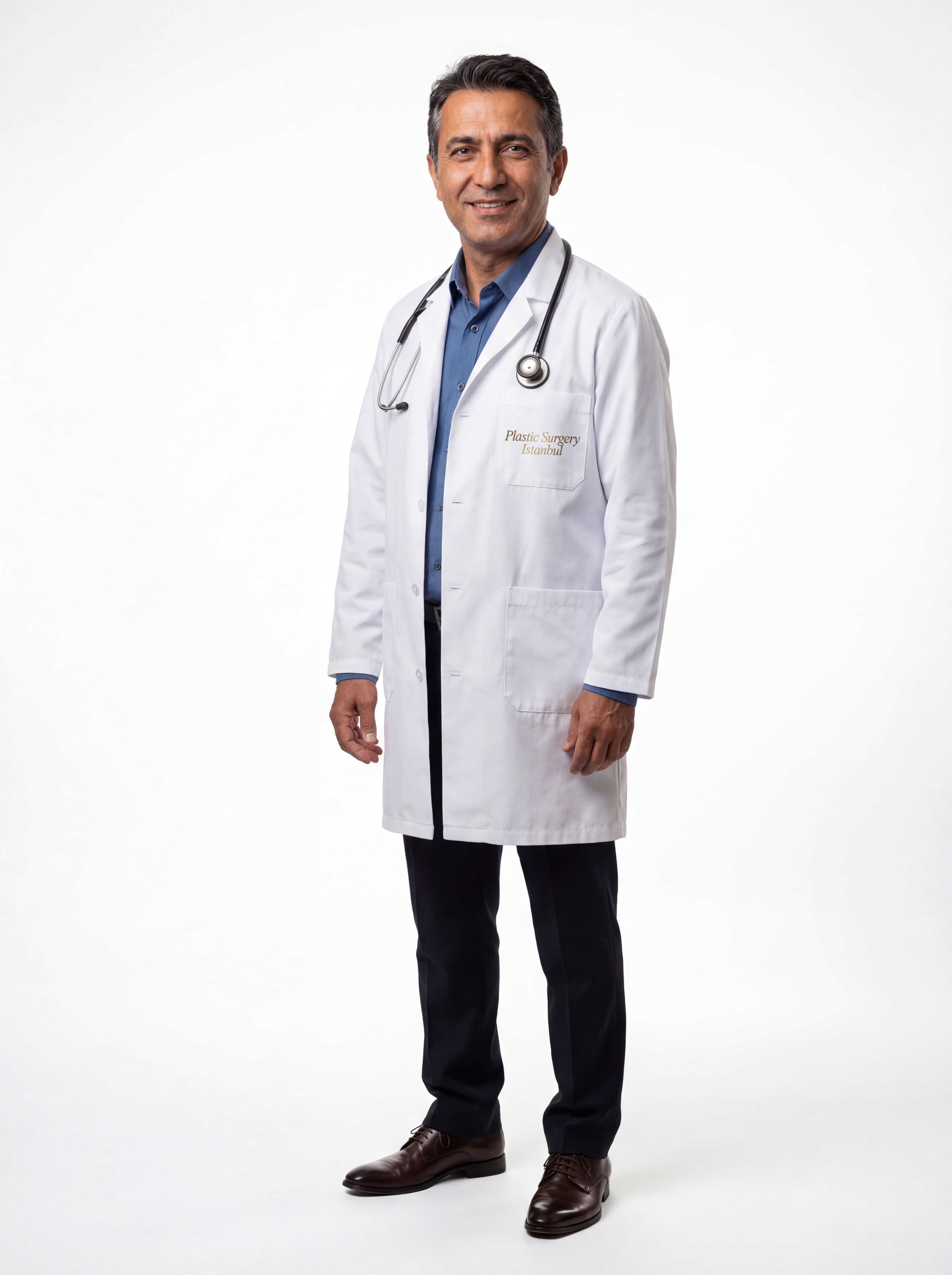
With over 20 years of periorbital and facial surgery expertise, Prof. Dr. Uçar is one of Turkey's most sought-after revision blepharoplasty specialists — drawing complex corrective cases from across the US, Europe, and the Middle East.
- ISAPS Member — Global Top 5%
- 20+ Years Periorbital Surgery Expertise
- Revision Blepharoplasty Specialist
- Sub-3% Complication Rate (Revisions)
- JCI Hospital Affiliation
Why Choose a Revision Blepharoplasty Specialist?
Revision blepharoplasty requires a specialist because: (1) secondary anatomy is fundamentally different from primary — scar tissue alters every tissue plane, (2) tissue reserves are limited — there is less margin for error, (3) structural reconstruction techniques (grafting, canthoplasty) are not part of standard blepharoplasty training, and (4) the psychological complexity of revision patients requires experienced clinical judgment.
| Factor | Revision | Primary |
|---|---|---|
| Surgical Complexity | Significantly higher — scarred tissue planes, altered anatomy | Standard — untouched, predictable anatomy |
| Tissue Availability | Limited — previous resection reduces reserves | Adequate — full tissue complement available |
| Technique Range Required | Broad — grafting, canthoplasty, reconstruction | Focused — excision and repositioning |
| Operating Time | 60–180 minutes depending on complexity | 30–60 minutes typically |
| Recovery Duration | 6–12 months for final results | 4–6 weeks for final results |
| Complication Rate | 5–15% (literature average) | 1–3% (literature average) |
| Surgeon Expertise Required | Fellowship-level periorbital specialization | Board-certified plastic surgeon |
| Cost (Turkey) | $2,500 – $5,500 | $1,500 – $3,500 |
Your Revision Blepharoplasty Journey in Istanbul: Step by Step
Detailed Online Assessment
Submit photos, operative reports from your previous surgery (if available), and a detailed description of your concerns through our secure portal. Prof. Dr. Uçar personally reviews every revision case with extended analysis — providing a comprehensive assessment within 48 hours including corrective approach, realistic outcome expectations, and transparent all-inclusive pricing.
Customized Revision Plan
Receive a detailed surgical plan specifying the exact techniques to be used — fat grafting, canthoplasty, skin grafting, scar revision, or combination approach. Includes explanation of why each technique was chosen, expected timeline for results, and any pre-operative preparation needed. For complex cases, a video consultation may be recommended.
VIP Arrival in Istanbul
Your dedicated VIP coordinator meets you at Istanbul Airport with private transfer to your 5-star hotel in Nişantaşı. Extended in-person consultation and examination on arrival day — including detailed measurement of eyelid position, symmetry assessment, and final surgical plan confirmation. Pre-operative testing at the JCI hospital.
Revision Surgery Day
Procedure at the JCI-accredited facility under general or local anesthesia with sedation (depending on complexity). Revision blepharoplasty typically takes 60–180 minutes. Post-operative recovery room monitoring for 2–4 hours. Return to your hotel with comprehensive aftercare kit and 24/7 emergency contact. First follow-up assessment within 24 hours.
Extended Recovery & Follow-Up
Suture removal at day 7–10. In-person assessment with Prof. Dr. Uçar before departure. Due to the longer healing timeline, our aftercare program includes structured virtual follow-ups at 2 weeks, 1 month, 3 months, 6 months, and 12 months post-surgery. Lifetime access to our revision aftercare support including the option for a touch-up procedure if needed.
Revision Blepharoplasty Turkey: Frequently Asked Questions
Revision blepharoplasty in Turkey costs $2,500–$5,500 all-inclusive at Plastic Surgery Istanbul. This covers the revision procedure, JCI-accredited facility, 5-star hotel accommodation, VIP airport transfers, and aftercare including virtual follow-ups for 12 months. The same revision in the US costs $6,000–$15,000 for the procedure alone — representing savings of 65–80%.
Get Your Free Revision Blepharoplasty Quote
Submit your details and previous surgery information — receive a personalized corrective plan and all-inclusive quote within 48 hours.