Transconjunctival Blepharoplasty Turkey: Scarless Lower Eyelid Surgery Cost, Results & Recovery
Transconjunctival blepharoplasty in Turkey delivers invisible, scarless lower eyelid rejuvenation — removing under-eye bags and fat pads through an internal incision with zero visible scarring — at 65–80% less than US pricing. All-inclusive packages from $1,800 at JCI-accredited hospitals with ISAPS-certified surgeons specializing in advanced periorbital techniques.
From $1,800
All-Inclusive Package
What Is Transconjunctival Blepharoplasty and Why Choose Turkey?
Transconjunctival blepharoplasty is a scarless lower eyelid surgery performed through an incision inside the eyelid (the conjunctiva), leaving absolutely no external scars. It removes or repositions herniated fat pads that cause under-eye bags and puffiness. Turkey ranks among the top 3 global destinations for this procedure because JCI-accredited Istanbul hospitals deliver results equivalent to top US and European clinics at 65–80% lower cost.
Transconjunctival blepharoplasty in Turkey has rapidly become one of the most sought-after cosmetic eye procedures among international patients — and the appeal is straightforward: world-class surgical precision with zero visible scars at a fraction of what you would pay in the United States. Unlike traditional lower blepharoplasty that creates an incision just below the lash line (leaving a faint but visible scar), the transconjunctival approach accesses the lower eyelid fat pads through the inner surface of the eyelid — the conjunctiva. The result is identical fat removal or repositioning, but with no external incision, no visible scarring, and significantly faster recovery.
Turkey performs over 50,000 blepharoplasty procedures annually — more than any European country — and the transconjunctival technique represents a growing proportion of these cases as patients increasingly demand scarless options. Istanbul's top oculoplastic and plastic surgeons have refined this technique through thousands of procedures, achieving complication rates comparable to or lower than major US academic centers. For American patients, Istanbul offers a combination that no domestic alternative can match: board-certified surgical expertise, JCI-accredited hospital safety, and all-inclusive pricing that covers everything from surgeon's fee to 5-star hotel accommodation.
At Plastic Surgery Istanbul, our lead surgeon Prof. Dr. Mehmet Kaan Uçar brings over 20 years of periorbital and facial surgery expertise with active ISAPS membership — placing him in the global top 5% of plastic surgeons. His approach to transconjunctival blepharoplasty prioritizes anatomical precision: rather than simply removing fat (which can create a hollow, aged look), he employs advanced fat repositioning techniques that smooth the lid-cheek junction and restore youthful volume contours. All-inclusive packages start from $1,800 — covering surgeon's fee, JCI hospital, anesthesia, 5-star hotel in Nişantaşı, VIP airport transfers, and 12-month structured aftercare.
Is Transconjunctival Blepharoplasty Right for You?
Free video consultation with Prof. Dr. Uçar — personalized anatomy assessment, technique recommendation, and exact pricing for your case.
Understanding Lower Eyelid Anatomy: The Science Behind Scarless Surgery
Lower eyelid anatomy involves 5 critical layers relevant to transconjunctival blepharoplasty: (1) skin (thinnest in the body at 0.5mm), (2) orbicularis oculi muscle, (3) orbital septum, (4) three orbital fat compartments (medial, central, lateral), and (5) the conjunctiva (the inner mucous membrane). The transconjunctival approach enters through the conjunctiva to access fat compartments directly, bypassing skin and muscle layers entirely.
Three Lower Eyelid Fat Compartments
The lower eyelid contains three distinct fat pads — medial (nasal), central, and lateral (temporal) — separated by fibrous septae. Under-eye bags form when these fat pads herniate forward through a weakened orbital septum. Transconjunctival blepharoplasty allows precise access to each compartment individually, enabling targeted fat removal or repositioning without disturbing the overlying skin or muscle.
The Conjunctiva: The Invisible Access Point
The conjunctiva is the mucous membrane lining the inner surface of the eyelid. It heals rapidly (within 5–7 days) without sutures and leaves no visible mark. This self-healing property makes it the ideal surgical access point — the incision is made inside the lower eyelid, the fat is addressed, and the conjunctiva closes on its own.
Orbital Septum and Fat Herniation
The orbital septum is a thin connective tissue membrane that acts as a retaining wall for orbital fat. As we age, the septum weakens, allowing fat to push forward and create visible bags. Transconjunctival blepharoplasty in Turkey addresses this by either removing excess fat or, more commonly in modern technique, repositioning it to fill the tear trough depression below.
Lid-Cheek Junction (Tear Trough)
The tear trough is the groove between the lower eyelid and cheek — a key area in lower eyelid rejuvenation. Advanced transconjunctival technique involves releasing the fat from herniated compartments and draping it over the infraorbital rim to smooth this junction, creating a seamless transition from eyelid to cheek.
Skin and Muscle Preservation
Because the transconjunctival approach enters through the inside of the eyelid, it completely preserves the skin and orbicularis muscle layers. This is critical for maintaining lower eyelid support, preventing ectropion (eyelid pulling down), and ensuring a natural blink reflex — advantages that make it the preferred technique for younger patients and those with good skin elasticity.
Who Is an Ideal Candidate for Transconjunctival Blepharoplasty in Turkey?
Ideal candidates for transconjunctival blepharoplasty include adults with herniated lower eyelid fat pads (under-eye bags), patients with good lower eyelid skin elasticity, individuals seeking scarless surgery, patients with tear trough depressions suitable for fat repositioning, and those with genetic (not age-related) under-eye puffiness. Candidates should be 25+ with realistic expectations.
Patients with Under-Eye Bags and Fat Herniation
The primary indication for transconjunctival blepharoplasty is herniated lower eyelid fat — the puffy bags beneath the eyes that create a tired, aged appearance even in well-rested individuals. These bags are caused by weakening of the orbital septum, not by lack of sleep, and they cannot be resolved with creams, fillers, or lifestyle changes.
Good Skin Elasticity (No Significant Skin Excess)
The transconjunctival approach is ideal when the primary concern is fat — not excess skin. Patients with good skin elasticity will see the lower eyelid skin contract naturally after fat removal. If there is significant skin excess (crepey, wrinkled lower lids), a transcutaneous (external incision) approach or laser skin resurfacing may be added.
Younger Patients Seeking Prevention
Increasingly, patients in their late 20s and 30s with genetic predisposition to under-eye bags are choosing transconjunctival blepharoplasty in Turkey as a preventive procedure. The scarless approach is particularly appealing to this demographic — minimal downtime, no visible marks, and natural results that simply look like good genetics.
Tear Trough Deformity Candidates
Patients with both under-eye bags and a hollow tear trough groove benefit enormously from transconjunctival fat repositioning. Rather than removing fat and adding filler (a common but suboptimal approach), the surgeon's own fat is repositioned from the bag into the trough — a permanent, natural solution that eliminates both problems in a single procedure.
Patients Wanting Zero Downtime Visibility
Because there is no external incision, transconjunctival blepharoplasty patients can return to social activities within 5–7 days with minimal visible evidence of surgery. This makes it the preferred choice for professionals and public-facing individuals who cannot afford extended downtime.
Transconjunctival Blepharoplasty Techniques Available in Turkey
Transconjunctival blepharoplasty techniques available in Turkey include: (1) Standard transconjunctival fat removal for isolated fat pads, (2) Transconjunctival fat repositioning (SOOF lift) for tear trough correction, (3) Transconjunctival with laser skin resurfacing for combined fat and skin concerns, (4) Transconjunctival with fat grafting for volume restoration, and (5) Transconjunctival with canthopexy for lower lid tightening.
Standard Transconjunctival Fat Removal
The fundamental technique: a small incision is made on the inner surface of the lower eyelid, and herniated fat is directly visualized, clamped, and excised from one, two, or all three compartments. The conjunctiva is left to heal without sutures. This approach is ideal when under-eye bags are the sole concern and skin quality is excellent. Prof. Dr. Uçar uses bipolar cautery for hemostasis, minimizing bruising and ensuring precise fat removal.
Transconjunctival Fat Repositioning (SOOF Lift)
The gold standard in modern lower blepharoplasty. Rather than simply removing fat, the herniated fat is released from its compartments, elevated, and draped over the infraorbital rim into the tear trough depression. This simultaneously eliminates the bag and fills the hollow — creating a smooth, youthful lid-cheek transition without any volume loss. Prof. Dr. Uçar's preferred technique for most patients, achieving results that look natural decades later.
Transconjunctival + CO₂ Laser Resurfacing
Combines internal fat management with fractional CO₂ laser applied to the external lower eyelid skin. The laser tightens skin, stimulates collagen production, and improves texture — addressing both the fat component (transconjunctivally) and the skin component (with laser) without any surgical incision on the skin surface. Recovery is slightly longer (7–10 days) due to laser healing but results are comprehensive.
Transconjunctival + Autologous Fat Grafting
For patients with significant volume loss in the periorbital region, transconjunctival fat removal is combined with micro-fat grafting harvested from the abdomen or inner thigh. The grafted fat is injected into the tear trough, malar region, and temple to restore a youthful facial volume framework. This comprehensive approach addresses not just the bags but the overall periorbital aging pattern.
Transconjunctival + Canthopexy
When lower eyelid laxity is present (a loose or slightly drooping lower lid), canthopexy — tightening of the lateral canthal tendon — is performed alongside transconjunctival fat management. This prevents post-operative lower lid malposition (ectropion) and creates a more defined, almond-shaped eye contour. The canthopexy is performed through a tiny incision hidden in the lateral canthal crease.
Transconjunctival Blepharoplasty Cost: Turkey vs. United States
Transconjunctival blepharoplasty in Turkey costs $1,800–$3,200 all-inclusive (surgeon, JCI hospital, anesthesia, 5-star hotel, VIP transfers, aftercare). The same procedure in the US costs $4,500–$9,000 for surgeon's fee alone — excluding hospital, anesthesia, and recovery costs. Turkey offers 65–80% savings with equivalent or superior outcomes.
Standard
$1,800
- Standard transconjunctival fat removal
- JCI-accredited hospital
- Board-certified anesthesiologist
- 4-star hotel (3 nights)
- Airport transfers
- 6-month aftercare
Premium
$2,500
- Fat repositioning (SOOF lift) or laser combo
- JCI-accredited hospital (VIP suite)
- Board-certified anesthesiologist
- 5-star hotel Nişantaşı (5 nights)
- VIP airport transfers
- 12-month aftercare
- 3D simulation consultation
Elite
$3,200
- Fat repositioning + canthopexy or fat grafting
- JCI-accredited hospital (presidential suite)
- Senior anesthesiologist
- 5-star hotel Nişantaşı (7 nights)
- Private VIP transfers
- Lifetime aftercare
- 3D simulation + post-op laser session
- Concierge coordinator
Transconjunctival Blepharoplasty Cost: Turkey vs. Major US Cities
New York
US cost: $6,000 – $9,000
Istanbul: $1,800 – $3,200
Save 72%
Los Angeles
US cost: $5,500 – $8,500
Istanbul: $1,800 – $3,200
Save 70%
Miami
US cost: $5,000 – $7,500
Istanbul: $1,800 – $3,200
Save 68%
Chicago
US cost: $4,800 – $7,000
Istanbul: $1,800 – $3,200
Save 67%
Houston
US cost: $4,500 – $6,500
Istanbul: $1,800 – $3,200
Save 65%
San Francisco
US cost: $6,500 – $9,000
Istanbul: $1,800 – $3,200
Save 74%
Boston
US cost: $5,500 – $8,000
Istanbul: $1,800 – $3,200
Save 70%
Dallas
US cost: $4,500 – $6,500
Istanbul: $1,800 – $3,200
Save 65%
Transconjunctival Blepharoplasty Recovery: Day-by-Day Timeline
Transconjunctival blepharoplasty recovery is significantly faster than traditional lower blepharoplasty: Day 1–2 mild swelling and bruising, Day 3–5 major improvement, Day 5–7 return to social activities, Day 10–14 near-complete healing, and Day 30 final results visible. No suture removal is needed as the conjunctival incision self-heals.
Immediate Post-Op
Mild swelling and bruising around the lower eyelids. Cold compresses applied 20 minutes on/off. Antibiotic eye drops prescribed. Vision is clear but eyes may feel slightly gritty from the internal incision. Sleep with head elevated on 2 pillows.
Peak Swelling
Swelling and bruising reach their peak — this is normal and expected. Continue cold compresses. Many patients describe this as the 'worst' phase, but discomfort is minimal (2–3/10 pain scale). Over-the-counter pain medication is sufficient for most patients.
Rapid Improvement
Swelling begins to resolve noticeably. Bruising starts transitioning from dark purple to yellow-green. Most patients can read, watch television, and use screens comfortably. Light walking encouraged to promote circulation and healing.
Social Recovery
80% of visible swelling has resolved. Residual bruising can be concealed with mineral makeup. Most patients return to non-strenuous work and social activities. The conjunctival incision has fully self-sealed by this point.
Near-Complete Healing
95% of recovery is complete. Mild residual puffiness may be present (especially in the morning) but is not noticeable to others. Return to all normal activities including light exercise. Avoid heavy lifting and contact sports for 2 more weeks.
Final Results
Swelling has fully resolved. Final contour and shape are visible. The under-eye area appears smooth, refreshed, and natural — with no evidence of surgical intervention. Results are permanent for fat removal; fat repositioning results last indefinitely.
Transconjunctival Blepharoplasty Results: What to Expect
Transconjunctival blepharoplasty results are among the most satisfying in facial plastic surgery — primarily because the improvement is dramatic yet completely natural-looking. Under-eye bags that have bothered patients for years (or decades) are permanently eliminated, and the absence of any visible scar means that the result looks like nature, not surgery. Patients consistently report that friends and family notice they look 'refreshed' and 'well-rested' without being able to identify what changed.
The longevity of results depends on the technique employed. Standard fat removal provides permanent elimination of the removed fat — those specific fat cells will never return. However, remaining fat cells can enlarge with significant weight gain, and the aging process continues. Fat repositioning results are considered permanent and age-gracefully because the repositioned fat continues to behave naturally in its new position, maintaining the smooth lid-cheek contour as the face ages.
Prof. Dr. Uçar's patient portfolio demonstrates consistently natural results across all age groups and ethnicities. American patients particularly appreciate the 'no one can tell' quality of transconjunctival results — a critical factor for patients in professional and social environments where obvious cosmetic surgery may carry stigma. Our before-and-after gallery showcases results at 1 month, 3 months, 6 months, and 1 year post-operative, demonstrating the progressive refinement and long-term stability of transconjunctival outcomes.
Safety and Risks: Transconjunctival Blepharoplasty in Turkey
Transconjunctival blepharoplasty is one of the safest cosmetic procedures with a complication rate below 1% at JCI-accredited facilities. Key safety advantages over transcutaneous approach: no risk of visible scarring, significantly lower risk of ectropion (eyelid pulling), preserved orbicularis muscle function, and faster healing. All procedures at Plastic Surgery Istanbul are performed in JCI hospitals by ISAPS-certified surgeons.
The safety profile of transconjunctival blepharoplasty is inherently superior to transcutaneous (external incision) lower blepharoplasty — and this is precisely why it has become the preferred technique among fellowship-trained oculoplastic surgeons worldwide. By avoiding any incision through the skin and orbicularis muscle, the transconjunctival approach eliminates the two most concerning risks of traditional lower blepharoplasty: visible scarring and ectropion (lower lid retraction/pulling down). The International Society of Aesthetic Plastic Surgery (ISAPS) reports transconjunctival complication rates below 1% when performed by qualified surgeons in accredited facilities.
At Plastic Surgery Istanbul, every transconjunctival blepharoplasty is performed in a JCI-accredited hospital with full ICU backup, continuous monitoring, and a board-certified anesthesiologist — the same safety infrastructure required at top US academic medical centers. Prof. Dr. Uçar performs a comprehensive preoperative assessment including ocular surface examination, tear production testing (Schirmer's test), lid laxity evaluation (snap-back test), and detailed photographic analysis to identify any risk factors and customize the surgical plan accordingly.
Potential but rare complications include: temporary chemosis (conjunctival swelling, self-resolving in 1–2 weeks), minor asymmetry (correctable with office-based adjustment), under-correction (additional fat can be addressed in a minor revision), and extremely rare infection (<0.1%). The most significant advantage of the transconjunctival approach is what it avoids: no risk of visible scarring, no risk of skin shortening, no risk of lower lid malposition — the three complications that most concern patients considering lower eyelid surgery.
Your Surgeon: Prof. Dr. Mehmet Kaan Uçar
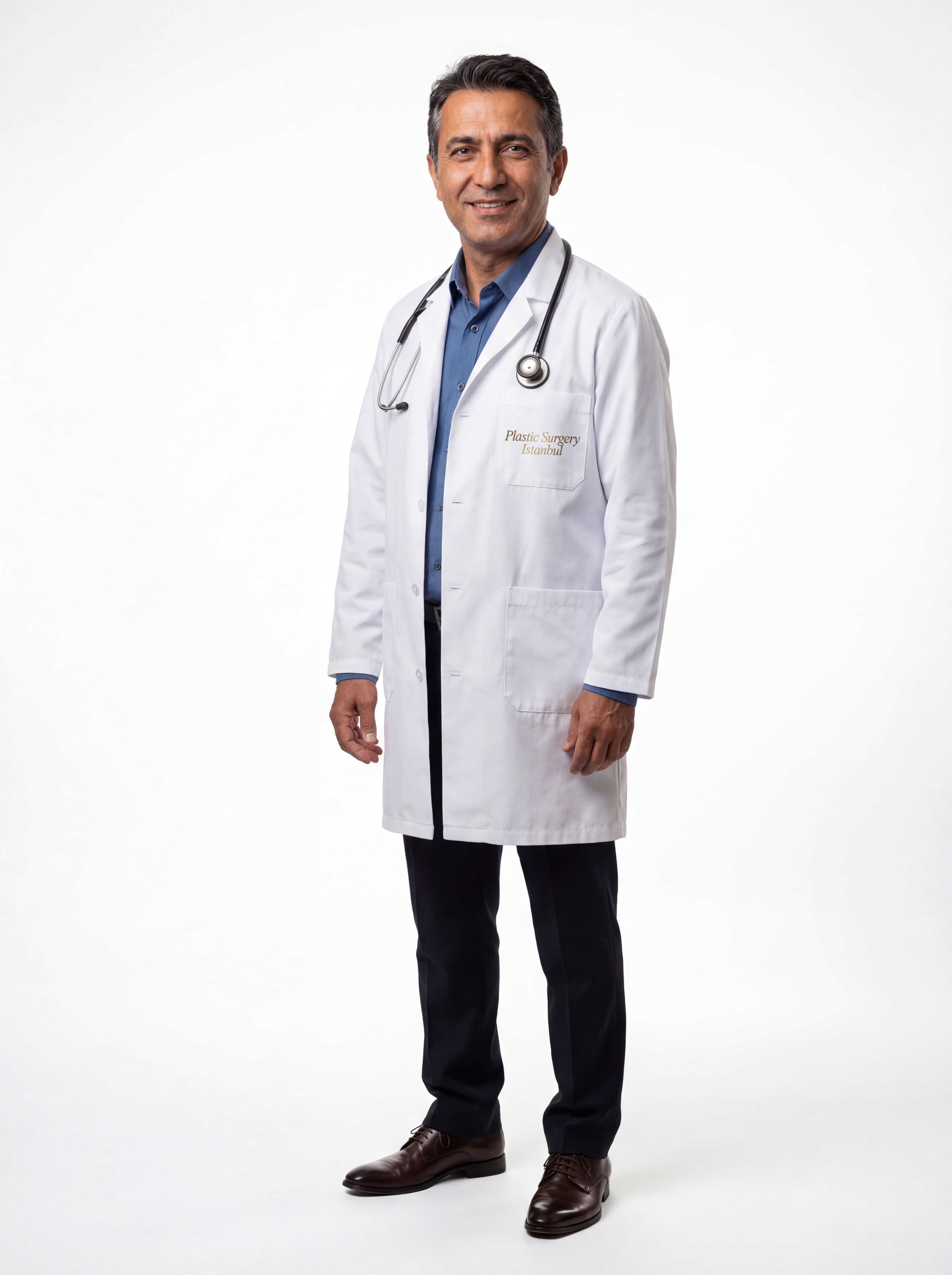
With over 20 years of periorbital and facial surgery expertise, Prof. Dr. Uçar has performed thousands of lower eyelid procedures — developing an advanced transconjunctival approach that prioritizes scarless results and anatomical precision.
- ISAPS Member — Global Top 5%
- 20+ Years Periorbital Surgery Expertise
- Advanced Transconjunctival Technique
- Sub-1% Complication Rate
- JCI Hospital Affiliation
Transconjunctival vs. Transcutaneous Blepharoplasty: Which Is Right for You?
Transconjunctival blepharoplasty uses an internal incision (inside the eyelid) with zero visible scarring, ideal for fat-only concerns with good skin. Transcutaneous blepharoplasty uses an external incision below the lash line, allowing skin removal, but leaves a scar and carries higher ectropion risk. Transconjunctival is preferred for patients under 50 with good skin elasticity.
| Factor | Transconjunctival | Transcutaneous |
|---|---|---|
| Incision Location | Inside the eyelid (conjunctiva) | Below the lash line (external skin) |
| Visible Scarring | None — zero external marks | Faint scar below lashes (usually fades) |
| Fat Removal/Repositioning | Yes — full access to all 3 compartments | Yes — full access via external approach |
| Skin Removal | No (combine with laser if needed) | Yes — skin excess can be excised |
| Ectropion Risk | Extremely low (<0.1%) | Higher (1–3%) |
| Recovery Time | 5–7 days social recovery | 10–14 days social recovery |
| Best For | Fat herniation with good skin | Fat + significant skin excess |
| Cost (Turkey) | $1,800 – $3,200 | $2,000 – $3,500 |
Your Transconjunctival Blepharoplasty Journey in Istanbul: Step by Step
Free Online Consultation
Submit photos and medical history through our secure portal. Prof. Dr. Uçar personally reviews every case and provides a detailed assessment within 24 hours — including technique recommendation, expected outcomes, and transparent all-inclusive pricing. No obligation, no hidden fees.
3D Simulation & Planning
Receive a personalized 3D simulation showing expected results based on your specific anatomy. This simulation guides surgical planning and ensures alignment between your expectations and achievable outcomes. Travel dates are coordinated with your schedule.
VIP Arrival in Istanbul
Your dedicated VIP coordinator meets you at Istanbul Airport with private transfer to your 5-star hotel in Nişantaşı — Istanbul's most prestigious neighborhood, walking distance from the clinic. In-person consultation and preoperative assessment on arrival day.
Surgery Day
Arrive at the JCI-accredited hospital for final preparations. Transconjunctival blepharoplasty is performed under local anesthesia with sedation (30–60 minutes). You rest in a private recovery suite and return to your hotel the same day with your aftercare kit and detailed instructions.
Recovery & Follow-Up
Daily check-ins with your coordinator. In-person follow-up with Prof. Dr. Uçar on day 3 and day 7. Enjoy Istanbul's culture, cuisine, and shopping during your gentle recovery. Fly home with your fresh, natural results and lifetime access to our aftercare program.
Transconjunctival Blepharoplasty Turkey: Frequently Asked Questions
Transconjunctival blepharoplasty in Turkey costs $1,800–$3,200 all-inclusive at Plastic Surgery Istanbul. This covers surgeon's fee, JCI-accredited hospital, anesthesia, 5-star hotel accommodation, VIP airport transfers, and 12-month aftercare. The same procedure in the US costs $4,500–$9,000 for the surgeon's fee alone — representing savings of 65–80%.
Get Your Free Transconjunctival Blepharoplasty Quote
Submit your details and receive a personalized all-inclusive quote within 24 hours — including technique recommendation and 3D simulation.