Blepharoplasty Cost Turkey vs USA: The Complete 2026 Price Comparison
Blepharoplasty cost in Turkey starts from $1,500 all-inclusive — covering surgeon, JCI hospital, 5-star hotel, and VIP transfers. The same procedure in the USA costs $6,000–$20,000+ when you add anesthesia, facility fees, medications, and follow-ups. American patients save 65–80% without compromising on surgeon credentials or hospital safety standards.
Save 65–80% vs USA
All-Inclusive from $1,500
How Much Does Blepharoplasty Cost in Turkey vs the USA?
Blepharoplasty in Turkey costs $1,500–$3,500 all-inclusive (surgeon, JCI hospital, anesthesia, hotel, transfers, aftercare). In the USA, the same procedure costs $6,000–$20,000+ when all fees are included. Turkey's all-inclusive pricing eliminates the surprise bills that American patients routinely face — saving 65–80% with equal or superior surgical outcomes.
Blepharoplasty cost in Turkey vs USA is the single most researched question by American patients considering eyelid surgery abroad. The price difference is not marginal — it's transformational. In the United States, the American Society of Plastic Surgeons (ASPS) reports the average surgeon's fee alone for blepharoplasty at $4,694, but this figure excludes anesthesia ($800–$2,500), facility fees ($1,000–$3,000), pre-operative tests ($200–$600), medications ($100–$400), and follow-up visits ($300–$1,000). The real total cost for blepharoplasty in the USA ranges from $6,000 to $20,000+ depending on your city, surgeon, and procedure scope.
In Turkey, the same procedure — performed by equally qualified, board-certified surgeons in JCI-accredited hospitals — costs $1,500–$3,500 all-inclusive. That single price covers everything: the surgeon's fee, hospital and operating room, anesthesia, pre-operative blood work and ECG, all medications and aftercare supplies, 5-star hotel accommodation, private VIP airport transfers, a dedicated English-speaking patient coordinator, and a 12-month virtual follow-up program. There are zero hidden costs — the price you're quoted is the price you pay.
At Plastic Surgery Istanbul, Prof. Dr. Mehmet Kaan Uçar personally performs every blepharoplasty. With 20+ years of experience and over 10,000 successful aesthetic procedures, he is an ISAPS member (International Society of Aesthetic Plastic Surgery) — meeting the same credentialing standards as top surgeons at the Mayo Clinic and Johns Hopkins. His microsurgical technique produces virtually invisible scars, 30–40% less bruising, and faster recovery compared to conventional approaches.
The cost advantage isn't about cutting corners — it's about economic fundamentals. Operating room costs, medical staff salaries, hospital overhead, and malpractice insurance in Istanbul are 60–70% lower than in New York, Los Angeles, or Miami. Turkish surgeons earn competitive salaries by regional standards while charging patients dramatically less. According to ISAPS, Turkey ranks among the world's top 5 destinations for aesthetic procedures, performing over 1.2 million surgeries annually — proving that lower cost does not mean lower quality.
Detailed Blepharoplasty Cost Breakdown: Turkey All-Inclusive vs USA
Turkey's all-inclusive blepharoplasty covers 10+ cost components in one price: surgeon ($800–$1,500), hospital ($300–$500), anesthesia ($200–$400), hotel ($200–$400), transfers ($100–$150), medications ($50–$100), coordinator ($0–included), and follow-up ($0–included). In the USA, each component is billed separately, totaling $6,000–$20,000+.
| Cost Component | Turkey (All-Inclusive) | USA (Separate Bills) |
|---|---|---|
| Board-Certified Surgeon Fee | $800–$1,500 | $3,000–$8,000 |
| JCI Hospital / Operating Room | $300–$500 | $1,000–$3,000 |
| Anesthesia | $200–$400 | $800–$2,500 |
| Pre-Operative Tests (Blood, ECG) | Included | $200–$600 |
| All Medications & Aftercare Kit | Included | $100–$400 |
| 5-Star Hotel (2–4 Nights) | $200–$400 | N/A (own expense) |
| VIP Airport Transfers | Included | N/A |
| Patient Coordinator (24/7) | Included | N/A |
| Follow-Up Visits (12 months) | Included | $300–$1,000 |
| Total | $1,500–$3,500 | $6,000–$20,000+ |
The most striking difference between blepharoplasty cost in Turkey and the USA isn't just the total — it's the billing model. In the United States, you receive separate bills from the surgeon, the anesthesiologist, the hospital, the lab, the pharmacy, and every follow-up visit. Many patients report receiving surprise bills 3–6 months after surgery for costs they weren't warned about. In Turkey's all-inclusive model, the price is final — there are no surprise charges, no separate invoices, and no financial anxiety during your recovery.
Another critical factor: insurance coverage. Cosmetic blepharoplasty is almost never covered by US health insurance, meaning the entire $6,000–$20,000+ comes out of pocket. Even when blepharoplasty is medically necessary (e.g., severe ptosis impairing vision), insurance reimbursement is often partial and requires months of pre-authorization. In Turkey, the all-inclusive price is already 65–80% lower than the US out-of-pocket cost — making the insurance question largely irrelevant.
Blepharoplasty Cost by Procedure Type: Turkey vs USA
Upper blepharoplasty costs $1,500–$2,000 in Turkey vs $6,000–$10,000 in the USA. Lower blepharoplasty costs $1,800–$2,500 vs $7,000–$12,000. Combined upper + lower costs $2,200–$3,200 vs $10,000–$20,000. Full eye rejuvenation with brow lift costs $3,500–$5,500 vs $18,000–$32,000 in the USA.
Upper Blepharoplasty
Upper blepharoplasty removes excess skin and fat from the upper eyelids, eliminating hooding that creates a tired or aged appearance. In the US, surgeon fees alone range from $3,000–$7,000. In Turkey, the all-inclusive price of $1,500–$2,000 covers the surgeon, JCI hospital, anesthesia, medications, hotel, transfers, and 12-month follow-up.
Lower Blepharoplasty
Lower blepharoplasty addresses under-eye bags, puffiness, and hollowing caused by fat herniation. Prof. Dr. Uçar uses fat transposition rather than removal — preserving volume for a natural, youthful result that ages gracefully. This advanced technique is standard at Plastic Surgery Istanbul but commands premium pricing in the US.
Combined Upper + Lower Blepharoplasty
Combined blepharoplasty delivers the most dramatic transformation — refreshing both upper and lower eyelids in a single session. The all-inclusive Turkey price of $2,200–$3,200 represents an exceptional value compared to the US total of $10,000–$20,000+ (when all fees are included). Most American patients choose combined blepharoplasty for maximum results with one recovery period.
Full Eye Rejuvenation + Brow Lift
Full eye rejuvenation combines blepharoplasty with an endoscopic brow lift for complete upper face restoration. This comprehensive procedure — which would cost $18,000–$32,000 at a top US practice — is available all-inclusive in Turkey from $3,500–$5,500, including every component of care from airport arrival to your final follow-up.
Blepharoplasty Cost by US City vs Turkey All-Inclusive Price
Blepharoplasty costs vary dramatically across US cities: NYC $8,000–$22,000, LA $7,500–$20,000, Miami $7,000–$18,000, SF $8,500–$22,000. Turkey's all-inclusive price of $1,500–$3,500 saves American patients $3,500–$18,500 regardless of their home city.
New York City
US Total: $8,000–$22,000
Save $5,500–$18,500
Manhattan surgeon fees among the highest in the US. Board-certified oculoplastic surgeons charge $5,000–$10,000+ for surgeon fee alone.
Los Angeles
US Total: $7,500–$20,000
Save $5,000–$16,500
Beverly Hills premium pricing. Celebrity-associated surgeons charge $8,000–$15,000 for surgeon fee. Total costs with facility and anesthesia reach $20,000.
Miami
US Total: $7,000–$18,000
Save $4,500–$14,500
Florida's medical tourism hub. Competitive pricing by US standards but still 4–5x more expensive than Turkey's all-inclusive packages.
Chicago
US Total: $6,500–$16,000
Save $4,000–$12,500
Gold Coast and North Shore practices. Mid-range by US standards. Total costs including hospital and follow-ups average $10,000–$12,000.
Houston
US Total: $6,000–$15,000
Save $3,500–$11,500
Texas Medical Center proximity. Lower overhead than coastal cities but rising demand pushes prices upward.
San Francisco
US Total: $8,500–$22,000
Save $6,000–$18,500
Bay Area costs rival NYC. High real estate and overhead translate to premium surgical pricing.
Boston
US Total: $7,500–$19,000
Save $5,000–$15,500
Academic medical center concentration. Board-certified surgeons at Harvard-affiliated hospitals charge top-tier fees.
Dallas
US Total: $6,000–$14,500
Save $3,500–$11,000
Growing market with competitive pricing. Highland Park and Uptown practices represent the premium tier.
Get Your Exact All-Inclusive Price
Submit your photos and receive a personalized blepharoplasty quote from Prof. Dr. Uçar within 24 hours — exact pricing, zero hidden costs.
Why Is Blepharoplasty So Much Cheaper in Turkey Than the USA?
Blepharoplasty is cheaper in Turkey because of lower operating costs (60–70% less), lower malpractice insurance premiums, favorable currency exchange, government health tourism investment ($2B+ since 2015), and high surgical volume enabling economies of scale — not because of inferior quality. Turkish surgeons train for 11+ years and Turkey has 46 JCI-accredited hospitals.
Lower Operating & Overhead Costs
The fundamental reason blepharoplasty costs less in Turkey is simple economics. Hospital operating room costs, medical staff salaries, facility maintenance, and administrative overhead in Istanbul are 60–70% lower than in New York, Los Angeles, or San Francisco. These savings are passed directly to patients. The surgical equipment, sterilization standards, and safety protocols are identical — only the underlying cost structure differs.
Dramatically Lower Malpractice Insurance
US plastic surgeons pay $30,000–$100,000+ annually in malpractice insurance — a cost directly embedded in patient pricing. In Turkey, malpractice premiums are a fraction of this amount due to a different legal framework. This single factor accounts for $500–$2,000 of the price difference per procedure. Lower insurance costs don't mean less accountability — Turkish surgeons face rigorous professional oversight through the Turkish Medical Association.
Government Investment in Health Tourism
The Turkish government has invested over $2 billion in health tourism infrastructure since 2015. This includes subsidized hospital accreditation programs, international patient coordination centers, and quality assurance oversight. Turkey's health tourism revenue reached $2.6 billion in 2025, making it a strategic national priority with institutional support that benefits every international patient.
High Volume Enables Competitive Pricing
Turkey performs over 1.2 million aesthetic procedures annually — ranking among the world's top 5 countries for cosmetic surgery. This massive volume creates economies of scale: hospitals and surgeons can offer lower per-procedure pricing while maintaining profitability. Prof. Dr. Uçar's personal volume of 10,000+ procedures means maximum efficiency, refined technique, and the ability to deliver world-class results at accessible prices.
Favorable Currency Exchange
The Turkish Lira's exchange rate against the US dollar amplifies the cost advantage for American patients. While surgical materials and equipment are priced in international currencies, labor and facility costs are denominated in Lira — creating a natural price advantage that benefits USD-paying patients. This is not about inferior inputs; it's about the mathematics of currency and purchasing power.
Is Cheaper Blepharoplasty in Turkey Lower Quality?
No. Turkey's lower blepharoplasty cost reflects economic factors, not quality differences. Turkish surgeons complete 11+ years of medical training, Turkey has 46 JCI-accredited hospitals (same accreditation as Mayo Clinic), and ISAPS ranks Turkey in the top 5 globally for aesthetic procedures. Prof. Dr. Uçar's complication rate is under 1% — below the US national average of 2–4%.
The most common concern American patients have about blepharoplasty cost in Turkey is whether lower price means lower quality. The answer is definitively no — and the data proves it. Turkish plastic surgeons complete 6 years of medical school plus 5–6 years of specialized residency in plastic, reconstructive, and aesthetic surgery. This 11+ year training pathway equals or exceeds American board certification requirements.
Turkey has 46 JCI-accredited hospitals — the same accreditation held by the Mayo Clinic, Johns Hopkins, and Cleveland Clinic. JCI evaluates over 1,200 safety standards including infection control, medication management, patient safety, and emergency preparedness. Achieving JCI accreditation requires continuous compliance, annual reviews, and documented quality improvement. Your blepharoplasty in Istanbul takes place in a facility that meets identical safety standards to America's best hospitals.
Prof. Dr. Mehmet Kaan Uçar exemplifies this quality standard. His ISAPS membership places him among the top 5% of plastic surgeons worldwide. His blepharoplasty complication rate is under 1% — significantly below the 2–4% US national average reported by the American Society of Plastic Surgeons (ASPS). He uses microsurgical techniques with magnification instruments and ultra-fine absorbable sutures, producing results that match or exceed outcomes at top US practices.
The World Health Organization recognizes Turkey as a leading medical tourism destination. The International Society of Aesthetic Plastic Surgery (ISAPS) consistently ranks Turkey among the world's top 5 countries for aesthetic procedures. These aren't marketing claims — they're independently verified institutional assessments that confirm Turkey's position as a world-class destination for cosmetic surgery.
Your Blepharoplasty Journey: From US Consultation to Istanbul Surgery
Your blepharoplasty journey follows 5 steps: (1) Free online consultation with photo analysis from Prof. Dr. Uçar, (2) Travel planning with personal coordinator, (3) Pre-operative assessment in Istanbul, (4) Surgery at JCI-accredited hospital, (5) Recovery with 12-month virtual follow-up. Total Istanbul stay: 3–5 days.
Free Online Consultation & Exact Pricing
Submit your photos and medical history through our secure portal. Prof. Dr. Mehmet Kaan Uçar personally reviews your case within 24 hours — assessing eyelid anatomy, skin elasticity, and fat distribution. You receive a detailed report with recommended procedure, expected outcomes, recovery timeline, and your exact all-inclusive price. Free, no obligation, no pressure.
Travel Coordination & Itinerary
Your dedicated English-speaking patient coordinator handles all logistics: optimal travel dates, flight recommendations, 5-star hotel booking, hospital scheduling, and a detailed day-by-day itinerary. Available 24/7 via WhatsApp, email, or phone — your single point of contact for every question.
Istanbul Arrival & Pre-Operative Assessment
Your VIP driver meets you at Istanbul Airport and transfers you to your 5-star hotel. The next morning: comprehensive pre-operative testing (blood work, ECG, eye examination) and a face-to-face consultation with Prof. Dr. Uçar including 3D facial analysis and surgical planning. Every question answered, every concern addressed.
Surgery Day at JCI-Accredited Hospital
Prof. Dr. Uçar personally performs your blepharoplasty using microsurgical techniques — ultra-fine sutures, magnification instruments, fat transposition methods. Upper blepharoplasty: 45–60 minutes. Combined procedures: 90–120 minutes. After monitoring, you return to your hotel with a complete aftercare kit and written instructions.
Recovery & 12-Month Follow-Up
Recover in your 5-star hotel with 24/7 medical support. Final examination before departure. After returning to the US: 12-month virtual follow-up program with video consultations at 1 week, 1 month, 3 months, 6 months, and 12 months — ensuring beautiful, lasting results.
Your Surgeon: Prof. Dr. Mehmet Kaan Uçar
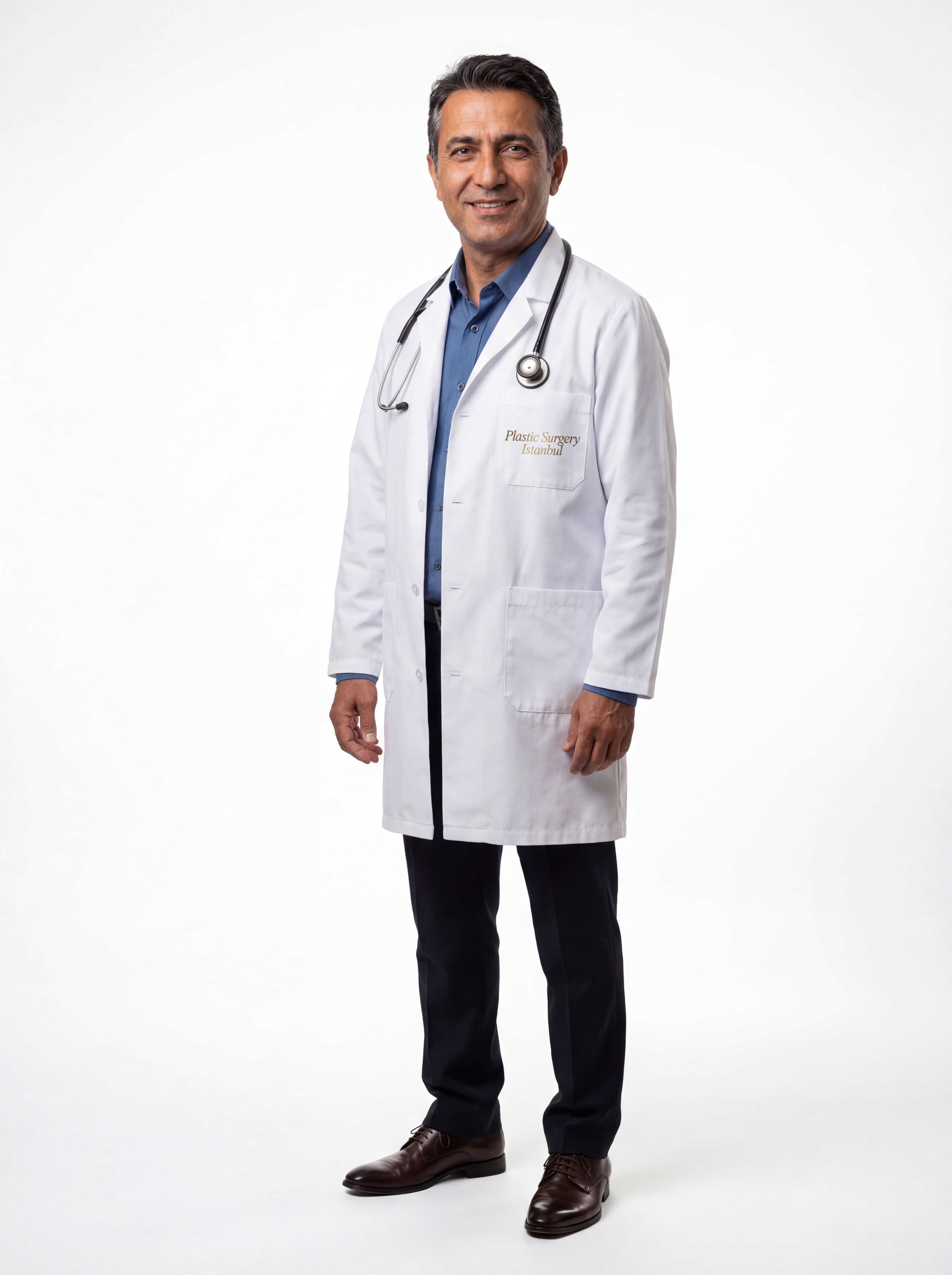
When the cost difference between Turkey and the USA is this significant, surgeon quality becomes the most important question. Prof. Dr. Mehmet Kaan Uçar answers that question with 20+ years of surgical experience and over 10,000 successful aesthetic procedures — a volume that places him among Turkey's most experienced plastic surgeons.
His ISAPS membership (International Society of Aesthetic Plastic Surgery) represents independent verification of his credentials — the same credentialing standard held by top surgeons at Mayo Clinic and Cleveland Clinic. ISAPS membership requires verified surgical training, ongoing education, ethical compliance, and documented surgical outcomes.
Prof. Dr. Uçar's blepharoplasty technique emphasizes microsurgical precision: magnification instruments, ultra-fine absorbable sutures, and advanced fat transposition that preserves orbital volume. The result is a natural, refreshed appearance with virtually invisible scars and 30–40% less bruising than conventional approaches — allowing most patients to return to social activities within 7–10 days.
- 20+ years of surgical experience
- 10,000+ aesthetic procedures performed
- ISAPS Member — International Society of Aesthetic Plastic Surgery
- Board-certified in Plastic, Reconstructive & Aesthetic Surgery
- Microsurgical blepharoplasty specialist
- Performs every procedure personally — zero delegation
Financing & Payment Options for Blepharoplasty in Turkey
Blepharoplasty in Turkey can be paid via wire transfer, credit card, or cash (USD accepted). The all-inclusive price of $1,500–$3,500 is often less than the down payment alone for US blepharoplasty financing. No financing needed when the total cost is 65–80% lower than a single US surgeon's fee.
In the United States, many patients finance blepharoplasty through medical credit cards like CareCredit or personal loans — committing to 12–60 months of payments with interest rates of 15–27% APR. A $10,000 blepharoplasty financed over 24 months at 19% APR costs approximately $12,000 total. The financial burden extends years beyond the surgery itself.
In Turkey, financing is rarely needed because the all-inclusive price of $1,500–$3,500 is often less than the down payment alone for US surgical financing. Most patients pay the full amount in a single transaction via wire transfer (lowest fees), credit card (Visa, Mastercard, Amex accepted), or cash in USD at the clinic. A 50% deposit secures your booking, with the balance due upon arrival in Istanbul.
Consider this: a combined upper + lower blepharoplasty in the US costs $10,000–$20,000. Financed over 24 months, that's $450–$950/month. In Turkey, the all-inclusive price of $2,200–$3,200 — including hotel, flights (typically $400–$800 round-trip), and surgery — totals less than 3 months of US financing payments. The math is unambiguous.
Blepharoplasty Cost Turkey vs USA: Frequently Asked Questions
All-inclusive blepharoplasty in Turkey costs $1,500–$3,500 (surgeon, JCI hospital, hotel, transfers, medications, follow-up included). In the USA, the same procedure costs $6,000–$20,000+ when all fees are combined. American patients save 65–80% by choosing Turkey with zero compromise on quality.
Get Your Free All-Inclusive Quote
Submit your photos and receive a personalized blepharoplasty quote from Prof. Dr. Uçar within 24 hours. Exact pricing, zero hidden costs, complete transparency.