Deep Plane Facelift vs Traditional Facelift
The traditional facelift promised rejuvenation — the deep plane facelift delivers it. Learn exactly how these two techniques differ in anatomy, results, longevity, and value so you can choose the approach that truly reverses aging rather than temporarily masking it.

Deep Plane vs Traditional Facelift — Quick Comparison
Why the Deep Plane Facelift vs Traditional Facelift Comparison Matters
A traditional facelift typically refers to skin-only or superficial SMAS techniques that tighten the outer layers of the face, producing results lasting 3–7 years with risk of an unnatural pulled look. The deep plane facelift works beneath the SMAS layer, repositioning deep facial structures as a composite unit, delivering dramatically more natural results lasting 10–15 years.
If you're considering a facelift, you've likely encountered the term 'traditional facelift' — a broad label covering skin-only lifts, SMAS plication, and superficial techniques that have been performed for decades. While these approaches represented breakthroughs in their era, they all share a fundamental limitation: they address the symptoms of facial aging (loose skin) without correcting the underlying cause (structural descent of deep tissues).
The deep plane facelift represents a paradigm shift in facial rejuvenation surgery. Rather than pulling skin tighter or folding a superficial muscle layer, it enters the sub-SMAS plane — the space beneath the facial muscle sheet — and repositions the entire composite unit of muscle, fat, and connective tissue back to its youthful position. The skin then redraped naturally, without tension, producing results that look like you, simply 10–15 years younger.
At Plastic Surgery Istanbul, Prof. Dr. Cengiz Volkan Demirtaş — with 7,200+ facial operations and Manhattan fellowship training — has performed both traditional and deep plane facelifts extensively. His clinical experience confirms what research demonstrates: for patients seeking natural, lasting rejuvenation, the deep plane facelift vs traditional facelift comparison overwhelmingly favors the modern technique.
What Is a Traditional Facelift? Understanding the Older Techniques
A traditional facelift is an umbrella term for older facelift techniques including skin-only lifts and superficial SMAS procedures. These methods tighten the face by pulling skin laterally or folding the SMAS layer, producing moderate improvement lasting 3–7 years. They do not address deep structural descent, midface aging, or nasolabial folds effectively.
The Skin-Only Facelift: The Original Approach
The earliest facelift technique — dating to the early 20th century — involved simply cutting away excess skin and pulling the remaining skin tighter. This skin-only facelift produced immediate visible tightening but had critical flaws: results faded quickly (often within 1–3 years), the skin gradually stretched again, and the procedure created obvious signs of surgery including visible scars, distorted earlobes, and an unnatural 'windswept' appearance.
While pure skin-only facelifts are rarely performed today by reputable surgeons, their legacy persists in the public's fear of looking 'done' after a facelift. Many patients researching facial rejuvenation have seen photographs of overdone skin-pull results — and this is exactly what drove the development of deeper, more anatomically sophisticated techniques. The skin-only approach proved that surface-level solutions cannot solve deep structural problems.
The SMAS Plication and Imbrication Techniques
In the 1970s, surgeons discovered the SMAS (superficial musculoaponeurotic system) — a fibromuscular layer beneath the skin that connects facial muscles to the overlying skin. SMAS plication involves folding this layer and suturing it to create tightness, while SMAS imbrication removes a strip of SMAS and sutures the edges together. These techniques represented a genuine improvement over skin-only lifts.
However, SMAS techniques still work on or above this layer — they never enter the deep plane beneath it. This means they cannot address the retaining ligaments that tether facial structures to bone, the deep fat pads that descend with aging, or the midface complex responsible for cheek volume and nasolabial fold depth. The result is a partial correction that typically lasts 5–7 years before gravity reasserts itself.
Why 'Traditional' Is No Longer Sufficient for Modern Patients
Today's patients demand natural-looking results that last — not a temporary tightening that needs repeating every few years. Traditional techniques, whether skin-only or superficial SMAS, share a common limitation: they fight gravity with tension rather than addressing the anatomical structures that gravity has displaced. This tension-based approach is why traditional facelift results look progressively less natural over time and why revision rates are higher.
The modern patient researching deep plane facelift vs traditional facelift options deserves to understand this fundamental distinction. The choice isn't between two comparable techniques with minor differences — it's between an approach that treats the symptom (loose skin) and one that corrects the disease (structural descent). This understanding is why the deep plane technique has become the gold standard at top facial surgery centers worldwide.
What Is a Deep Plane Facelift? The Modern Gold Standard
A deep plane facelift works beneath the SMAS layer, releasing the retaining ligaments and repositioning the composite unit — SMAS, muscles, deep fat pads, and connective tissue — as a single flap. Skin is redraped without tension, producing the most natural and longest-lasting facelift results available: 10–15 years of rejuvenation.
The Anatomical Innovation Behind Deep Plane Surgery
The deep plane facelift enters the sub-SMAS plane — the anatomical space beneath the superficial musculoaponeurotic system — and releases the retaining ligaments (zygomatic, masseteric, and mandibular) that tether deep facial structures to the underlying bone. As these ligaments weaken with age, the tissues they support descend under gravity's constant pull, creating the hallmarks of an aging face: jowls, deep nasolabial folds, and midface flattening.
Once these ligaments are released, the entire composite tissue flap — SMAS, facial muscles, deep malar fat pads, and connective tissue — is elevated vertically, reversing the exact direction of gravitational descent. The skin, freed from the underlying structures, is then redraped over the lifted framework without any tension. This zero-tension skin closure is the mechanical reason deep plane results look dramatically more natural than traditional facelift results.
Why Deep Plane Results Look 10–15 Years Younger, Not 'Done'
The reason traditional facelifts often produce a 'done' or 'pulled' appearance is that they apply lateral (sideways) tension to skin and superficial tissues. This creates a visible pulling force — particularly noticeable around the ears, temples, and cheekbones. Over time, as the tightened tissues gradually relax, the pulling effect can become even more apparent.
The deep plane technique eliminates this problem by design. Deep structures are lifted vertically — the opposite direction from gravitational descent — and the skin is redraped over them like a fitted sheet over a newly positioned mattress. No lateral pulling, no skin tension, no windswept appearance. Patients consistently report that friends and family notice they look 'refreshed' and 'well-rested' without identifying surgery as the cause. This natural outcome is the defining advantage of the deep plane approach.
Deep Plane vs Traditional Facelift: Complete Head-to-Head Comparison
This head-to-head comparison reveals why the deep plane facelift has replaced traditional techniques at leading facial surgery centers worldwide. On every measurable outcome — naturalness, longevity, comprehensiveness, patient satisfaction, and long-term value — the deep plane approach demonstrates clear superiority. Traditional facelift techniques remain a valid option for minimal aging, but for patients seeking meaningful, lasting rejuvenation, the evidence overwhelmingly favors the modern deep plane approach.
The only metric where traditional techniques have an advantage is procedure duration and initial cost. A 1.5–3 hour traditional facelift is shorter and less expensive upfront than a 4–6 hour deep plane procedure. However, when you calculate cost per year of natural rejuvenation, the deep plane technique is actually more economical — delivering twice the result duration at a modest incremental investment.
For US patients considering treatment in Istanbul, the value proposition becomes even more compelling. An all-inclusive deep plane facelift at Plastic Surgery Istanbul costs less than what most American patients pay for a traditional facelift domestically — while delivering dramatically superior results that last up to three times longer.
5 Reasons Deep Plane Beats the Traditional Facelift
1. Results That Last a Decade — Not Half of One
The most significant advantage of the deep plane facelift is result longevity. Because the technique repositions deep structures to their anatomically correct position — and because skin is redraped without tension — results remain stable for 10–15 years. Traditional facelift results typically begin visibly fading within 3–5 years as skin stretching resumes and gravity reasserts its effect on untreated deeper structures.
This longevity difference has profound financial implications. A single deep plane facelift at $5,000–$10,000 in Istanbul delivers the same duration of benefit as 2–3 traditional facelifts — each with its own cost, recovery, anesthesia risk, and time commitment. Patients who choose the deep plane approach the first time avoid the cycle of diminishing returns that characterizes traditional facelift revisions.
2. Natural Appearance: Eliminating the 'Done' Look Entirely
The fear of looking 'done,' 'pulled,' or 'plastic' is the number one concern among facelift candidates — and it's a legitimate concern with traditional techniques. Lateral skin tension creates visible signs of surgery: pixie ears (earlobe distortion), temporal hair loss, and the characteristic windswept appearance that makes faces look stretched rather than rejuvenated.
The deep plane technique eliminates these risks mechanically. By lifting deep structures vertically and closing skin without tension, the approach produces results that are virtually undetectable as surgical. Prof. Dr. Demirtaş's philosophy aligns with this principle: 'The best facelift is one nobody can identify — they just know you look phenomenal.' This natural outcome is non-negotiable for patients who value subtlety.
3. Complete Rejuvenation in a Single Procedure
A deep plane facelift simultaneously addresses the lower face (jowls, jawline), midface (cheeks, nasolabial folds), and neck (platysma bands, cervical laxity) as an integrated unit. Traditional facelifts primarily improve the lower face and jawline — often requiring separate procedures for the midface (midface lift, fat transfer) and neck (platysmaplasty) to achieve comparable comprehensiveness.
For patients traveling from the United States to Istanbul, this single-procedure comprehensiveness is particularly valuable. One surgery, one recovery, one trip — with results that outperform multiple traditional procedures combined. This efficiency is why the deep plane facelift has become the procedure of choice for international medical tourism patients seeking maximum value.
4. Lower Long-Term Revision Rates
Traditional facelift patients face a significantly higher likelihood of needing revision surgery within 10 years. As results fade — skin re-loosens, jowls re-form, and aging continues in untreated deeper layers — many patients return for second or third procedures. Each revision becomes technically more challenging, produces incrementally less improvement, and carries cumulative surgical risks.
Deep plane facelift patients, by contrast, enjoy remarkably stable results that age gracefully. Because the deep structures have been repositioned to their correct anatomical location, subsequent aging occurs from a more youthful baseline. Even 15 years after a deep plane facelift, patients typically look significantly younger than they would have without surgery — reducing or eliminating the need for revision.
5. Superior Value — Especially When Treated in Istanbul
When value is measured as cost per year of natural rejuvenation, the deep plane facelift wins decisively. At $5,000–$10,000 in Istanbul for 10–15 years of results, patients pay approximately $500–$670 per year. A traditional facelift at $2,500–$6,000 for 3–7 years of results costs $700–$1,700 per year — two to three times more per year of benefit.
For American patients, this value gap widens further. A traditional facelift in the US costs $10,000–$25,000 for surgery alone — no hotel, no transfers, no coordinator. The all-inclusive deep plane facelift in Istanbul, including flights from any US city, typically totals less than a domestic traditional facelift. Patients receive a categorically superior procedure at a lower total cost. This combination of clinical excellence and financial accessibility drives thousands of US patients to Istanbul annually.
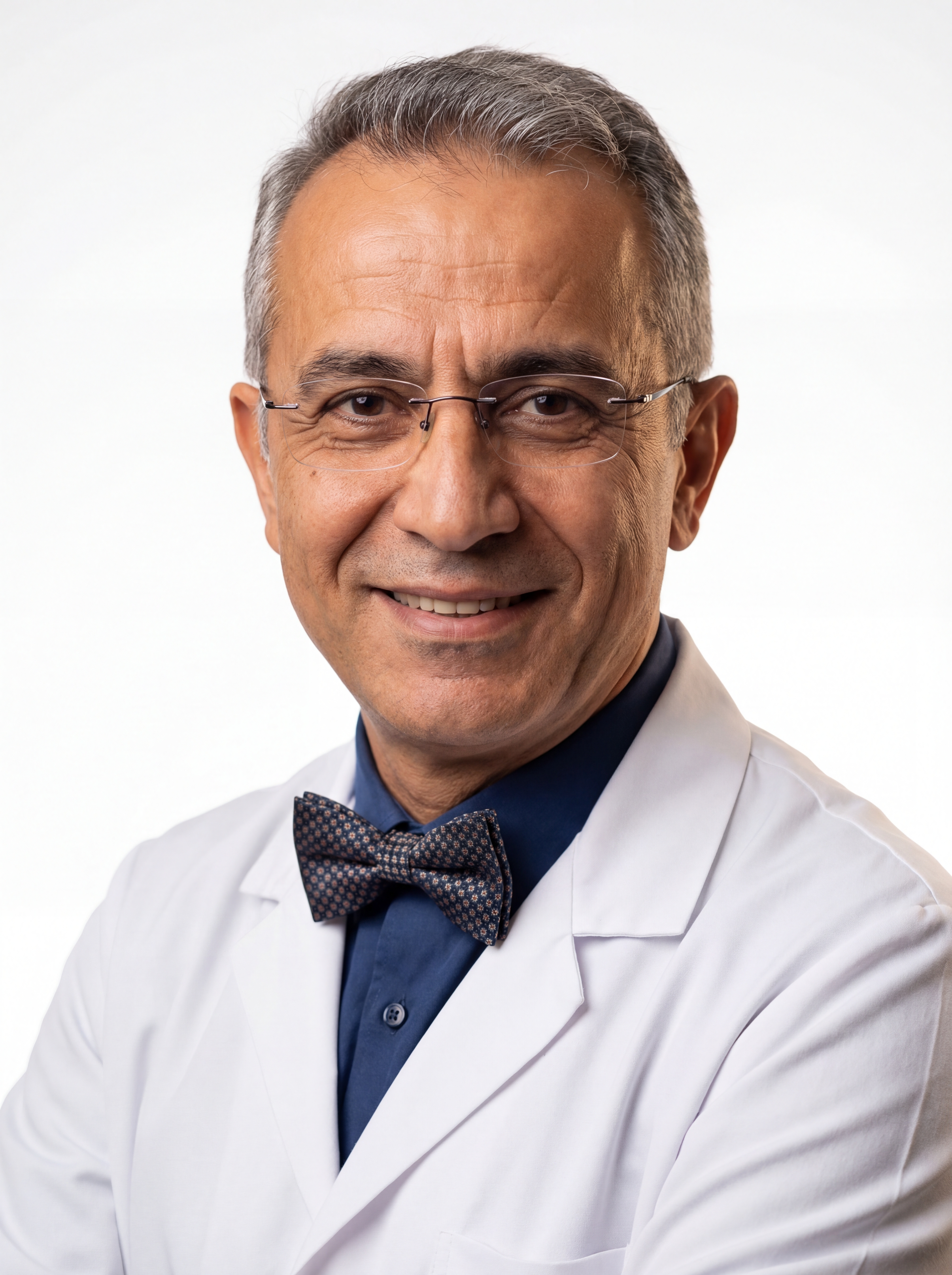
Your Surgeon: Prof. Dr. Cengiz Volkan Demirtaş — Deep Plane Expert
Every deep plane facelift at Plastic Surgery Istanbul is performed personally by Prof. Dr. Cengiz Volkan Demirtaş — whose experience spans both traditional and modern techniques across 7,200+ operations.
Prof. Dr. Cengiz Volkan Demirtaş completed his advanced fellowship training in Manhattan, New York — the birthplace of the deep plane facelift technique. During his fellowship, he trained alongside surgeons who refined both traditional and modern approaches, giving him a uniquely comprehensive understanding of what each technique can and cannot achieve. He brought this dual expertise back to Istanbul, where higher patient volumes have allowed him to perfect his deep plane technique across 7,200+ facial operations.
Having performed thousands of both traditional and deep plane facelifts, Prof. Demirtaş's recommendation is not theoretical — it's based on his own outcome data. His deep plane patients consistently achieve more natural results, report higher satisfaction, and maintain their improvement significantly longer than his traditional facelift patients. This first-hand clinical evidence is why he recommends the deep plane approach for the majority of patients seeking comprehensive facial rejuvenation.
Prof. Demirtaş believes the choice between traditional and deep plane should be guided by anatomy and goals — not cost alone. During your complimentary 3D consultation, he analyzes your specific aging pattern and honestly recommends the technique most likely to achieve your desired outcome. This patient-centered, evidence-based approach is why US patients trust Plastic Surgery Istanbul with their most important aesthetic decision.
Recovery: Deep Plane vs Traditional Facelift Timeline
While the deep plane facelift involves more extensive tissue work, the practical recovery difference between the two techniques is smaller than most patients expect.
Immediate Post-Op Care
Deep plane: overnight hospital stay with monitoring at JCI-accredited facility. Traditional: many patients go home same day. Both: compression garment applied, mild to moderate discomfort managed with oral medication.
Peak Swelling Phase
Both techniques show maximum swelling and bruising. Deep plane may have slightly more diffuse swelling due to deeper tissue manipulation. Traditional facelift bruising can be more concentrated around incision lines. Daily clinic check-ups for deep plane patients.
Suture Removal & Early Results
Sutures removed for both techniques. Traditional facelift patients may appear marginally more 'social-ready' at this stage. Deep plane patients see significant improvement as swelling subsides. Both: incisions healing well.
Social Recovery & Light Activity
Both: majority of bruising resolved, concealer can mask remaining discoloration. Return to light work and social activities. Deep plane patients may have residual swelling in the midface that continues resolving.
Full Activity Resumes
Both: exercise and physical activity resume. Deep plane results becoming increasingly natural as deep tissue repositioning settles into final position. Traditional results largely stabilized.
Final Results Emerge
Deep plane: results continue improving as deep structures fully settle — patients often notice progressive improvement through month 6. Traditional: results finalized by month 2–3. Remote follow-up at 3, 6, and 12 months for both.
Cost Comparison: Deep Plane Facelift vs Traditional Facelift
In Istanbul, an all-inclusive deep plane facelift costs $5,000–$10,000 while a traditional facelift costs $2,500–$6,000. In the US, deep plane costs $25,000–$50,000 and traditional costs $10,000–$25,000 (surgery only). Per year of results, the deep plane technique is 2–3x more cost-effective.
Istanbul vs. United States Cost Breakdown
The initial price difference between deep plane and traditional facelifts in Istanbul is relatively modest — roughly $2,500–$4,000. But the real financial comparison must account for result duration and revision probability. A deep plane facelift delivering 10–15 years of natural rejuvenation at $5,000–$10,000 represents exceptional value. A traditional facelift at $2,500–$6,000 that fades within 3–7 years and likely requires revision may cost significantly more over a decade.
For US patients, the value comparison is even more dramatic. An all-inclusive deep plane facelift in Istanbul — including surgery, JCI hospital stay, 5-star hotel, VIP airport transfers, personal patient coordinator, medications, and 12-month aftercare — costs less than what most Americans pay for a traditional facelift at home. There are no hidden costs, no surprise bills, and no additional charges at Plastic Surgery Istanbul. When you add round-trip flights from any US city ($600–$1,200), the total package still represents savings of $15,000–$40,000 compared to having a traditional facelift in the United States.
Which Technique Is Right for You? Expert Guidance
Ideal Candidates for the Deep Plane Facelift
The deep plane technique is recommended for patients with moderate to advanced facial aging — particularly those with visible jowling, midface descent (flattened cheeks), deep nasolabial folds, and neck laxity. If your goal is the most natural-looking, longest-lasting result achievable in a single procedure, the deep plane approach is the clear choice. Patients aged 45–75 with structural descent are the primary candidates.
The deep plane facelift is especially valuable for patients who want 'one and done' — a single comprehensive procedure rather than serial touch-ups. International patients traveling from the US to Istanbul particularly benefit from this approach, as it maximizes the result achieved in a single surgical trip. Prof. Demirtaş's outcome data shows deep plane patients report the highest satisfaction scores across all facelift techniques in his practice.
When a Traditional Facelift Might Be Considered
A traditional facelift (superficial SMAS) may be appropriate for patients with very early aging — mild jawline laxity without midface descent or significant volume loss. Patients in their early 40s with primarily skin-related changes and good underlying bone structure may achieve satisfactory results with a less extensive approach.
However, Prof. Dr. Demirtaş advises caution: patients who are 'borderline' between traditional and deep plane should strongly consider the deep plane approach. The incremental cost in Istanbul is minimal ($2,500–$4,000 more), but the difference in result quality and longevity is substantial. 'If you're already committing to surgery, anesthesia, and recovery,' he counsels, 'choose the technique that will give you the best result for the longest time.'
The Free 3D Consultation: Data-Driven Decision Making
The optimal technique depends on your unique facial anatomy — not age, not budget, not what worked for a friend. During your complimentary virtual consultation with Prof. Demirtaş, your face is analyzed using advanced 3D imaging to assess the degree of structural descent, skin quality, fat pad position, bone structure, and ligament laxity. This comprehensive analysis generates a personalized recommendation based on data, not guesswork.
Prof. Demirtaş performs both traditional and deep plane facelifts at high volume, so his recommendation is driven by your anatomy and goals — not technique bias. If a traditional approach will achieve your desired outcome, he'll recommend it honestly. But for the majority of patients seeking meaningful, lasting rejuvenation, the deep plane technique delivers objectively superior results. This transparent, patient-first approach is why Plastic Surgery Istanbul maintains a 98% patient satisfaction rate.
Safety Comparison: Deep Plane vs Traditional Facelift
Both deep plane and traditional facelifts have excellent safety profiles when performed by experienced, board-certified surgeons in accredited facilities. The most common concerns — bruising, swelling, temporary numbness — are expected effects that resolve within weeks for both techniques. Serious complications are rare with either approach.
The most frequently discussed safety concern regarding the deep plane technique is facial nerve injury, since the dissection occurs closer to nerve branches. However, clinical data from high-volume centers (including Plastic Surgery Istanbul) demonstrates that facial nerve injury rates for deep plane facelifts performed by experienced surgeons are comparable to traditional techniques: less than 0.5% for temporary injury, with permanent nerve damage being exceedingly rare. Prof. Dr. Demirtaş's 7,200+ facial operations provide an intimate familiarity with nerve anatomy and its natural variations.
Hematoma occurs in approximately 2–3% of cases for both techniques and is managed with a straightforward return to the operating room. Infection rates are below 1% in JCI-accredited facilities. The choice between deep plane and traditional should be driven by result quality and longevity — not safety concerns, as complication rates are comparable between properly performed versions of both techniques.
Patient Experiences: Choosing Deep Plane Over Traditional
"I had a traditional facelift in Houston 5 years ago. Results were okay for the first two years, then everything started sagging again. This time I flew to Istanbul for the deep plane with Prof. Demirtaş. The difference is staggering — my midface is lifted, my jawline is sculpted, and everyone says I look 10 years younger. I should have done this first."
"I was quoted $35,000 for a traditional facelift in New York. A friend recommended Plastic Surgery Istanbul. For less than a third of that price, I got a deep plane facelift — a superior technique — with 5-star everything included. Prof. Demirtaş is a true artist. My results at 8 months are better than my friend's traditional facelift results at 2 months."
"As a retired physician, I researched extensively before choosing my surgeon. The deep plane technique is anatomically superior — it's not marketing, it's science. Prof. Demirtaş explained everything with the depth I needed. My results are natural, youthful, and completely undetectable. The VIP Istanbul experience exceeded every expectation."
Frequently Asked Questions: Deep Plane vs Traditional Facelift
A traditional facelift works on the skin surface or the superficial SMAS layer, tightening through pulling or folding. A deep plane facelift enters beneath the SMAS, releases retaining ligaments, and repositions the entire composite unit — muscles, fat pads, and connective tissue — vertically. This deeper approach produces more natural, longer-lasting results.
Ready to Choose the Best Facelift Technique? Start Your Free Consultation
Now that you understand the critical differences between deep plane and traditional facelifts, the next step is a personalized assessment with Prof. Dr. Cengiz Volkan Demirtaş. He'll analyze your facial anatomy and honestly recommend the technique that delivers the best possible result for your unique case.
Explore More Facelift Resources
Facial Surgery
Related Procedures
Explore other facial surgery options available at our Istanbul clinic.