Laser Blepharoplasty Turkey: Non-Surgical Eyelid Tightening Cost, Results & Recovery
Laser blepharoplasty in Turkey uses advanced CO₂ and Erbium laser technology to tighten eyelid skin, reduce wrinkles, and rejuvenate the periorbital area — without scalpels or sutures — at 65–80% less than US pricing. All-inclusive packages from $1,200 at JCI-accredited hospitals with ISAPS-certified surgeons.
From $1,200
All-Inclusive Package
What Is Laser Blepharoplasty and Why Is Turkey a Top Destination?
Laser blepharoplasty is a minimally-invasive eyelid rejuvenation procedure that uses fractional CO₂ or Erbium:YAG lasers to tighten loose eyelid skin, stimulate collagen production, and reduce fine lines — without traditional surgical incisions. Turkey ranks among the top 3 global destinations for laser blepharoplasty because JCI-accredited Istanbul clinics deliver results comparable to top US and European facilities at 65–80% lower cost.
Laser blepharoplasty in Turkey has rapidly emerged as one of the most popular non-surgical eyelid treatments among international patients — driven by a powerful combination of cutting-edge laser technology and dramatic cost savings compared to Western pricing. Unlike traditional surgical blepharoplasty that involves incisions, tissue removal, and sutures, laser blepharoplasty uses precisely calibrated laser energy to vaporize thin layers of damaged skin, trigger deep collagen remodeling, and tighten the periorbital area from within. The result is smoother, firmer eyelid skin with minimal downtime and no visible scars.
Turkey performs over 50,000 blepharoplasty procedures annually — more than any European country — and laser-based techniques represent a rapidly growing segment as patients increasingly seek non-surgical alternatives. Istanbul's leading clinics invest in the latest-generation fractional CO₂ and Erbium:YAG laser platforms (UltraPulse, Fraxel, Sciton Contour), giving surgeons the precision tools needed to deliver predictable, reproducible results across diverse skin types. For American patients, Istanbul offers what no domestic alternative can match: board-certified surgical oversight, JCI-accredited safety standards, and all-inclusive pricing that covers everything from the procedure to luxury hotel accommodation.
At Plastic Surgery Istanbul, our lead surgeon Prof. Dr. Mehmet Kaan Uçar brings over 20 years of periorbital and facial surgery expertise with active ISAPS membership — placing him in the global top 5% of plastic surgeons. His approach to laser blepharoplasty is rooted in precision customization: laser parameters (power, density, pattern, depth) are individually calibrated for each patient's skin thickness, laxity, and pigmentation to maximize tightening while minimizing recovery. All-inclusive packages start from $1,200 — covering the procedure, JCI hospital, 5-star hotel in Nişantaşı, VIP airport transfers, and 12-month structured aftercare.
Is Laser Blepharoplasty Right for You?
Free video consultation with Prof. Dr. Uçar — personalized skin assessment, laser type recommendation, and exact pricing for your case.
How Does Laser Blepharoplasty Work? The Science of Eyelid Laser Resurfacing
Laser blepharoplasty works by delivering precisely controlled laser energy (CO₂ or Erbium:YAG) to the eyelid skin in a fractional pattern, creating thousands of microscopic treatment zones. This vaporizes damaged surface skin, stimulates deep collagen contraction (immediate tightening), and triggers neocollagenesis (new collagen formation over 3–6 months). The result is progressively tighter, smoother eyelid skin without surgical incisions.
Fractional Laser Energy Delivery
Modern laser blepharoplasty uses fractional technology — delivering laser energy in thousands of tiny columns (microthermal zones) rather than treating the entire surface. This leaves intact skin bridges between treatment zones, dramatically accelerating healing while still achieving significant tightening. The fractional pattern is customizable: deeper and denser for more severe laxity, lighter for fine lines and early aging.
Immediate Collagen Contraction
When laser energy penetrates the dermis, it immediately heats and contracts existing collagen fibers — producing visible tightening within hours of treatment. This 'instant' effect accounts for approximately 30–40% of the final result and is why patients notice firmer eyelid skin even before the healing process completes.
Neocollagenesis: Long-Term Remodeling
The true power of laser blepharoplasty lies in neocollagenesis — the body's wound-healing response that generates new, organized collagen over 3–6 months. As fresh collagen replaces damaged fibers, skin quality progressively improves: tighter texture, reduced wrinkles, improved elasticity. This delayed effect means results continue improving for months after treatment.
Epidermal Renewal and Pigment Correction
The laser simultaneously resurfaces the epidermal layer — removing sun damage, uneven pigmentation, and surface irregularities. For patients with hyperpigmented or crepey eyelid skin, this dual-action (resurfacing + tightening) delivers comprehensive rejuvenation that no single non-laser treatment can match.
CO₂ vs. Erbium:YAG — Choosing the Right Laser
CO₂ lasers penetrate deeper, produce more dramatic tightening, but require longer recovery (7–10 days). Erbium:YAG lasers are gentler, heal faster (3–5 days), and are better suited for darker skin tones with lower risk of hyperpigmentation. Prof. Dr. Uçar selects the optimal laser platform for each patient based on skin type, severity of laxity, and desired downtime.
Who Is an Ideal Candidate for Laser Blepharoplasty in Turkey?
Ideal candidates for laser blepharoplasty include adults with mild to moderate eyelid skin laxity, fine lines and crepey skin around the eyes, early eyelid aging not requiring surgical tissue removal, patients seeking non-surgical alternatives, and those with sun-damaged periorbital skin. Best candidates are 30–60 with realistic expectations about non-surgical results.
Mild to Moderate Eyelid Skin Laxity
Laser blepharoplasty is ideal for patients whose eyelid skin has lost elasticity and shows mild to moderate sagging — but not enough to require surgical excision. The laser tightens existing skin by up to 20–30%, which is sufficient for early-to-moderate aging but cannot replicate the dramatic lifting of surgical blepharoplasty for severe hooding.
Fine Lines and Crepey Eyelid Skin
Patients with a network of fine wrinkles and thin, crepey eyelid skin — common in fair-skinned individuals with sun exposure history — are excellent candidates. The fractional laser resurfaces the damaged epidermal layer while building new collagen beneath, addressing both surface texture and structural laxity simultaneously.
Patients Seeking Non-Surgical Options
For patients who are not ready for surgery — whether due to medical considerations, fear of anesthesia, or preference for minimal intervention — laser blepharoplasty in Turkey offers a compelling middle ground. Results are significant though less dramatic than surgery, with substantially shorter recovery and no surgical risks.
Combination with Surgical Blepharoplasty
Laser blepharoplasty is frequently combined with surgical techniques — particularly transconjunctival blepharoplasty. The surgery addresses fat herniation (bags), while the laser tightens the overlying skin without an external incision. This combination delivers comprehensive rejuvenation that neither technique could achieve alone.
Maintenance and Prevention Patients
Increasingly, patients in their 30s and early 40s are choosing laser blepharoplasty as a preventive measure — stimulating collagen production before significant laxity develops. It's also ideal as a maintenance treatment for patients who had surgical blepharoplasty years ago and want to refresh their results without repeat surgery.
Laser Blepharoplasty Techniques Available in Turkey
Laser blepharoplasty techniques available in Turkey include: (1) Fractional CO₂ laser blepharoplasty for maximum tightening, (2) Erbium:YAG laser blepharoplasty for gentle resurfacing, (3) Combined CO₂ + Erbium hybrid for balanced results, (4) Laser-assisted surgical blepharoplasty using laser as scalpel, and (5) Laser blepharoplasty with PRP for enhanced healing.
Fractional CO₂ Laser Blepharoplasty
The gold standard for maximum eyelid skin tightening. The UltraPulse CO₂ laser delivers deep fractional columns that penetrate to the mid-dermis, producing significant collagen contraction and neocollagenesis. Results are dramatic — up to 30% skin tightening — but recovery is longer (7–10 days of redness and peeling). Prof. Dr. Uçar customizes power (10–60W), density (5–25%), and pattern for each eyelid quadrant.
Erbium:YAG Laser Blepharoplasty
A gentler alternative that produces excellent resurfacing with less thermal damage and faster healing. The Erbium:YAG laser ablates tissue more precisely with a narrower zone of thermal injury, resulting in 3–5 day recovery versus 7–10 for CO₂. Ideal for patients with darker skin tones (Fitzpatrick IV–VI) where CO₂ carries higher risk of post-inflammatory hyperpigmentation.
Hybrid CO₂ + Erbium Laser Blepharoplasty
Combines the deep tightening power of CO₂ with the surface precision of Erbium in a single session. The CO₂ laser treats the deeper dermis for collagen contraction, while the Erbium refines the superficial layers for texture improvement and faster surface healing. This hybrid approach delivers 80–90% of full CO₂ results with significantly reduced recovery time.
Laser-Assisted Surgical Blepharoplasty
Uses the CO₂ laser as a cutting instrument instead of a traditional scalpel during surgical blepharoplasty. The laser simultaneously cuts and cauterizes, resulting in less bleeding, less bruising, more precise incisions, and faster healing compared to steel-blade surgery. The laser's thermal sealing effect reduces post-operative edema significantly.
Laser Blepharoplasty with PRP Therapy
Combines fractional laser treatment with Platelet-Rich Plasma (PRP) applied immediately after laser resurfacing. The laser creates thousands of micro-channels in the eyelid skin, and PRP (concentrated growth factors from your own blood) is applied topically, penetrating through these channels to accelerate healing and enhance collagen production. Results show 20–30% improvement in skin quality compared to laser alone.
Laser Blepharoplasty Cost: Turkey vs. United States
Laser blepharoplasty in Turkey costs $1,200–$2,800 all-inclusive (procedure, JCI hospital, 5-star hotel, VIP transfers, aftercare). The same procedure in the US costs $3,000–$6,500 for the procedure alone — excluding facility fees and recovery costs. Turkey offers 65–80% savings with equivalent or superior outcomes.
Standard
$1,200
- Erbium:YAG laser blepharoplasty
- JCI-accredited facility
- Topical anesthesia with sedation
- 4-star hotel (2 nights)
- Airport transfers
- 6-month aftercare
Premium
$2,000
- Fractional CO₂ or hybrid laser treatment
- JCI-accredited facility (VIP suite)
- Topical anesthesia with IV sedation
- 5-star hotel Nişantaşı (4 nights)
- VIP airport transfers
- 12-month aftercare
- Post-treatment skincare kit
Elite
$2,800
- CO₂ laser + PRP combination therapy
- JCI-accredited facility (presidential suite)
- Full sedation available
- 5-star hotel Nişantaşı (5 nights)
- Private VIP transfers
- Lifetime aftercare
- Medical-grade skincare protocol
- Second laser session (if needed at 3 months)
Laser Blepharoplasty Cost: Turkey vs. Major US Cities
New York
US cost: $4,500 – $6,500
Istanbul: $1,200 – $2,800
Save 72%
Los Angeles
US cost: $4,000 – $6,000
Istanbul: $1,200 – $2,800
Save 70%
Miami
US cost: $3,500 – $5,500
Istanbul: $1,200 – $2,800
Save 68%
Chicago
US cost: $3,500 – $5,000
Istanbul: $1,200 – $2,800
Save 67%
Houston
US cost: $3,000 – $4,500
Istanbul: $1,200 – $2,800
Save 65%
San Francisco
US cost: $5,000 – $6,500
Istanbul: $1,200 – $2,800
Save 74%
Boston
US cost: $4,000 – $5,500
Istanbul: $1,200 – $2,800
Save 70%
Dallas
US cost: $3,000 – $4,500
Istanbul: $1,200 – $2,800
Save 65%
Laser Blepharoplasty Recovery: Day-by-Day Timeline
Laser blepharoplasty recovery depends on laser type: Erbium:YAG recovery takes 3–5 days, CO₂ laser takes 7–10 days. Day 1–2: redness and mild swelling, Day 3–5: peeling begins, Day 5–7: major peeling resolves, Day 7–10: return to normal activities, Day 14–30: new collagen visible, Month 3–6: progressive tightening continues.
Immediate Post-Treatment
The treated eyelid skin appears pink to red with mild swelling. A protective ointment is applied to keep the skin moist and promote healing. Cool compresses reduce swelling. Sensation is similar to moderate sunburn — warm and tight. Antibiotic ointment and lubricating eye drops prescribed.
Initial Healing Phase
Redness and swelling peak. The skin begins forming a microscopic grid pattern as the fractional zones heal. Mild crusting may appear at treatment zones. Continue ointment application every 4–6 hours. Vision is unaffected but eyes may feel slightly dry.
Peeling Phase (Erbium)
For Erbium:YAG treatments, visible peeling occurs as the treated epidermal layer sheds. New, pink skin emerges beneath — visibly smoother and tighter. Most patients can return to social activities with mineral makeup at day 5. Sun protection is critical from this point forward.
Peeling Phase (CO₂)
For CO₂ laser treatments, the deeper peeling process begins. Old skin separates as new tissue regenerates beneath. This is the most cosmetically challenging phase — the skin looks bronzed and then peels. Results become visible as fresh skin emerges. Avoid picking or pulling at peeling skin.
Resolution Phase
For both laser types, the peeling process is largely complete. New skin is pink but can be concealed with mineral makeup. Most patients return to full normal activities including work. The initial tightening effect (collagen contraction) is clearly visible.
Progressive Improvement
Neocollagenesis drives continued tightening and skin quality improvement over 3–6 months. Redness fades to a healthy pink, then normalizes. Final results are typically visible at 3–6 months post-treatment. Patients often describe a 'delayed wow factor' as collagen remodeling completes.
Laser Blepharoplasty Results: What to Expect
Laser blepharoplasty results deliver a unique dual-timeline improvement that distinguishes this technique from all other eyelid rejuvenation methods. The immediate result — visible within days of treatment — comes from direct collagen contraction: existing collagen fibers shrink when heated, producing instant skin tightening of approximately 15–20%. This initial tightening is impressive on its own, but it represents only the beginning of the transformation.
The true power of laser blepharoplasty emerges over the following 3–6 months through neocollagenesis — the body's biological response to controlled thermal injury. New collagen fibers form, organize, and mature, progressively tightening and thickening the eyelid skin. Patients consistently report that their results at 6 months are significantly better than at 6 weeks — a 'delayed gratification' that rewards patience. Total improvement typically ranges from 30–50% tightening depending on the laser platform and parameters used.
Prof. Dr. Uçar's patient portfolio demonstrates consistently natural results across all skin types and age groups. The key advantage of laser blepharoplasty over surgical approaches is the quality of the resulting skin: not just tighter, but genuinely healthier — smoother texture, more even pigmentation, improved elasticity. Results last 3–5 years before the natural aging process creates enough new laxity to warrant retreatment, and maintenance sessions can extend results indefinitely.
Safety and Risks: Laser Blepharoplasty in Turkey
Laser blepharoplasty is one of the safest cosmetic procedures with a complication rate below 2% at experienced facilities. Primary risks include temporary hyperpigmentation (5–10%, resolves in 2–3 months), prolonged redness (rare, responds to topical treatment), and under-correction (retreatable). No surgical risks — no infection, scarring, or anesthesia complications. All procedures at Plastic Surgery Istanbul use FDA-cleared laser platforms at JCI hospitals.
The safety profile of laser blepharoplasty is fundamentally different from surgical blepharoplasty — and significantly more favorable. Because there is no incision, no tissue removal, and no sutures, the entire category of surgical complications (bleeding, infection, asymmetry, ectropion, scarring) is eliminated. The risks of laser blepharoplasty are primarily dermatological: temporary color changes, prolonged redness, and under-correction — all manageable and mostly self-resolving.
At Plastic Surgery Istanbul, Prof. Dr. Uçar performs all laser blepharoplasty procedures using FDA-cleared, medical-grade laser platforms (not cosmetic-grade devices). A comprehensive preoperative assessment includes Fitzpatrick skin typing, eyelid laxity evaluation, and tear film assessment to identify patients who might be better served by surgical techniques. This rigorous patient selection ensures that laser blepharoplasty is offered only to appropriate candidates — a critical factor in maintaining our sub-2% complication rate.
The most common concern — post-inflammatory hyperpigmentation (PIH) — occurs in approximately 5–10% of patients, primarily those with Fitzpatrick skin types IV–VI. Prof. Dr. Uçar mitigates this risk through careful laser parameter selection, pre-treatment with topical agents in at-risk patients, and strict post-treatment sun avoidance protocols. When PIH occurs, it typically resolves completely within 2–3 months with topical treatment. Permanent complications from laser blepharoplasty are extremely rare — less than 0.1% in published literature.
Your Surgeon: Prof. Dr. Mehmet Kaan Uçar
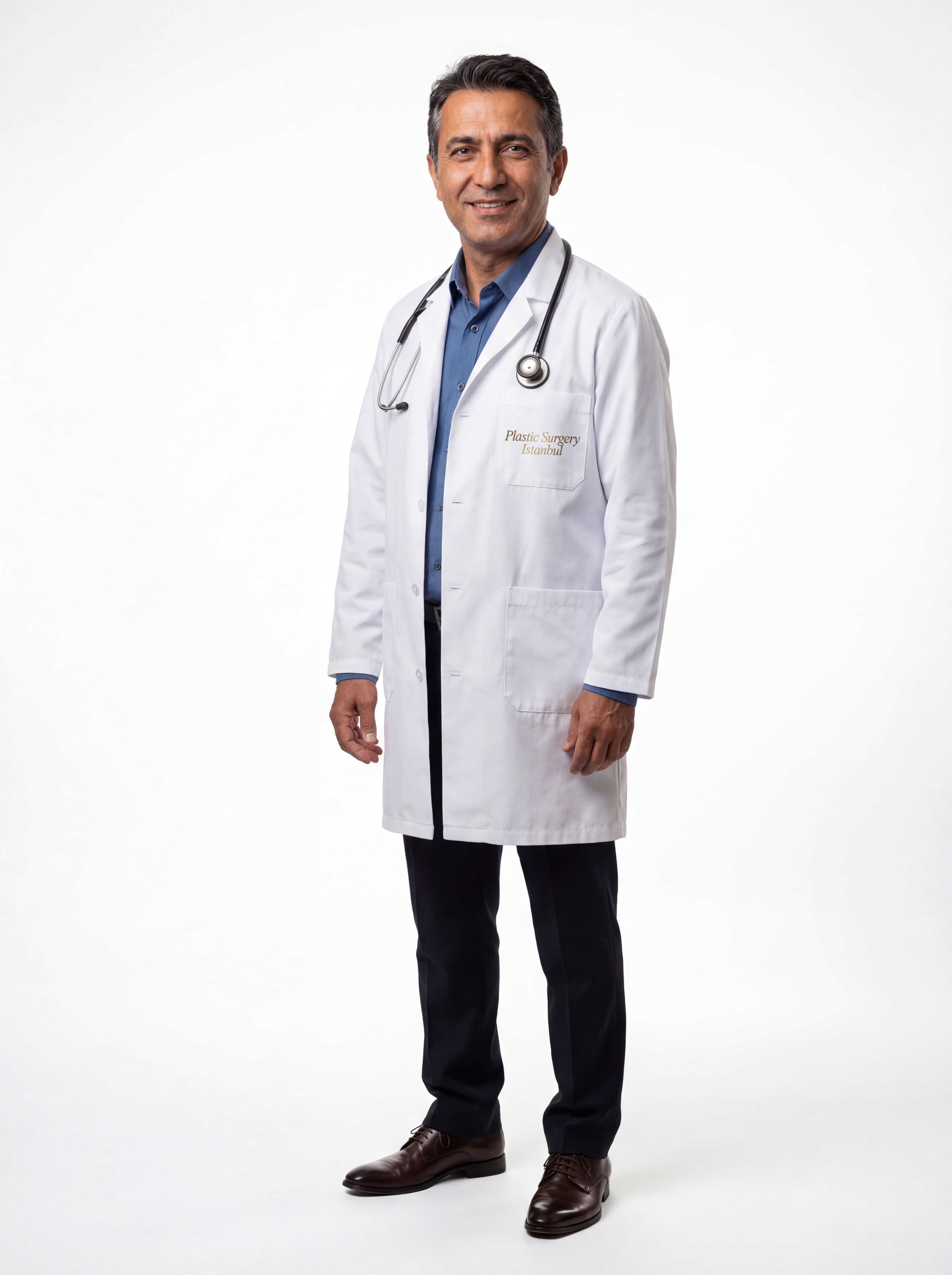
With over 20 years of periorbital and facial surgery expertise, Prof. Dr. Uçar combines surgical mastery with advanced laser technology — delivering customized laser blepharoplasty results calibrated to each patient's unique skin characteristics.
- ISAPS Member — Global Top 5%
- 20+ Years Periorbital Surgery Expertise
- Advanced Laser Resurfacing Certification
- Sub-2% Complication Rate
- JCI Hospital Affiliation
Laser Blepharoplasty vs. Surgical Blepharoplasty: Which Is Right for You?
Laser blepharoplasty is non-surgical, uses laser energy to tighten skin without incisions, ideal for mild-moderate laxity with 3–10 day recovery. Surgical blepharoplasty uses incisions to remove excess skin and fat, ideal for severe drooping with 10–14 day recovery. Laser is best for skin quality and early aging; surgery is best for significant tissue excess.
| Factor | Laser | Surgical |
|---|---|---|
| Procedure Type | Non-surgical / minimally invasive | Surgical with incisions |
| Anesthesia | Topical + sedation | Local with IV sedation or general |
| Skin Removal | No — tightens existing skin | Yes — excess skin excised |
| Fat Removal | No | Yes — fat can be removed/repositioned |
| Scarring | None | Hidden in crease or inside eyelid |
| Recovery | 3–10 days (peeling/redness) | 10–14 days (swelling/bruising) |
| Results Duration | 3–5 years (retreatable) | 10–15+ years (permanent) |
| Best For | Mild-moderate laxity, skin quality | Severe drooping, fat herniation |
| Cost (Turkey) | $1,200 – $2,800 | $1,800 – $3,500 |
Your Laser Blepharoplasty Journey in Istanbul: Step by Step
Free Online Consultation
Submit photos and medical history through our secure portal. Prof. Dr. Uçar personally reviews every case and provides a detailed assessment within 24 hours — including laser platform recommendation, expected results, and transparent all-inclusive pricing. No obligation, no hidden fees.
Personalized Treatment Plan
Receive a customized treatment plan specifying laser type (CO₂, Erbium, or hybrid), power settings, expected tightening, and realistic timeline for results. Pre-treatment skincare protocol provided 2 weeks before arrival if needed for your skin type.
VIP Arrival in Istanbul
Your dedicated VIP coordinator meets you at Istanbul Airport with private transfer to your 5-star hotel in Nişantaşı — Istanbul's most prestigious neighborhood. In-person consultation and skin assessment on arrival day. Treatment scheduled for the following morning.
Treatment Day
Arrive at the JCI-accredited facility. Topical anesthetic is applied to the eyelid area (numbing takes 30 minutes). The laser treatment itself takes 15–35 minutes. Post-treatment soothing protocol applied. Return to your hotel with aftercare kit and detailed instructions.
Recovery & Follow-Up
Daily check-ins with your coordinator. In-person review with Prof. Dr. Uçar on day 3. Enjoy Istanbul's culture and cuisine during your gentle recovery. Fly home with your refreshed, rejuvenated results and lifetime access to our aftercare program including virtual follow-ups at 1, 3, and 6 months.
Laser Blepharoplasty Turkey: Frequently Asked Questions
Laser blepharoplasty in Turkey costs $1,200–$2,800 all-inclusive at Plastic Surgery Istanbul. This covers the laser procedure, JCI-accredited facility, 5-star hotel accommodation, VIP airport transfers, and aftercare. The same procedure in the US costs $3,000–$6,500 for the procedure alone — representing savings of 65–80%.
Get Your Free Laser Blepharoplasty Quote
Submit your details and receive a personalized all-inclusive quote within 24 hours — including laser type recommendation and expected results timeline.