Blepharoplasty vs Botox: Permanent Surgery or Temporary Injections?
Blepharoplasty and Botox both target the eye area — but they work through completely different mechanisms and solve different problems. This evidence-based comparison helps you choose the right treatment. Turkey offers all-inclusive blepharoplasty from $1,500 at JCI-accredited hospitals — saving 65–80% vs US pricing.
From $1,500
All-Inclusive Package
Blepharoplasty vs Botox: Understanding the Fundamental Difference
Blepharoplasty is surgery that permanently removes excess skin and fat from the eyelids, while Botox (botulinum toxin) temporarily paralyzes muscles to smooth dynamic wrinkles like crow's feet and brow furrows. Blepharoplasty addresses structural aging (sagging skin, fat bags); Botox addresses muscular aging (expression lines). They treat different problems and are often combined for comprehensive eye rejuvenation.
Blepharoplasty vs Botox represents one of the most common treatment decisions in facial rejuvenation — yet many patients confuse what each can and cannot do. These treatments work through entirely different mechanisms: blepharoplasty physically removes excess tissue (skin, fat, muscle) from the eyelids, while Botox temporarily relaxes the muscles responsible for dynamic wrinkles around the eyes. Understanding this distinction is the key to choosing correctly.
The confusion arises because both treatments address the periorbital area — the region around the eyes where aging is most visible. However, aging affects this area in two distinct ways: structural changes (skin stretching, fat herniation, muscle weakening) and dynamic changes (repetitive muscle contractions creating crow's feet, frown lines, and forehead wrinkles). Blepharoplasty corrects structural changes; Botox addresses dynamic changes.
At Plastic Surgery Istanbul, Prof. Dr. Mehmet Kaan Uçar takes a comprehensive approach to periorbital rejuvenation. With over 20 years of facial surgery expertise and active ISAPS membership, he evaluates each patient's unique combination of structural and dynamic aging — recommending blepharoplasty, Botox, or a synergistic combination based on anatomy, not trending treatments.
According to ASPS (American Society of Plastic Surgeons), Botox was the #1 minimally invasive cosmetic procedure in 2024 with over 9 million treatments, while blepharoplasty ranked in the top 5 surgical procedures with over 325,000 operations. The growing trend is strategic combination — using both treatments for results neither achieves alone.
Head-to-Head: Blepharoplasty vs Botox Comparison Table
Blepharoplasty provides permanent results (10–15 years) with one-time cost ($1,500–$3,500 in Turkey), while Botox requires repeat treatments every 3–4 months ($300–$600 per session in the US). Blepharoplasty removes excess tissue; Botox relaxes muscles. Blepharoplasty has 7–14 day recovery; Botox has zero downtime.
| Factor | Blepharoplasty | Botox |
|---|---|---|
| Mechanism | Removes excess skin, fat, and muscle | Temporarily paralyzes muscles (blocks acetylcholine) |
| Best For | Hooded lids, under-eye bags, excess skin | Crow's feet, frown lines, brow position |
| Cannot Treat | Dynamic wrinkles (expression lines) | Excess skin, fat bags, structural sagging |
| Longevity | 10–15+ years (permanent tissue removal) | 3–4 months (requires repeat treatments) |
| Procedure Time | 45–90 minutes (surgical) | 10–15 minutes (injection) |
| Anesthesia | Local with sedation or general | None required (optional topical numbing) |
| Recovery Time | 7–14 days (bruising/swelling) | 0 days (immediate return to activities) |
| Results Visible | Immediate (final at 3–6 months) | 3–7 days (full effect at 2 weeks) |
| Scarring | Hidden in eyelid crease (virtually invisible) | No scars (injection only) |
| Cost in Turkey | $1,500–$3,500 one-time (all-inclusive) | $150–$300 per session |
| Cost in USA | $4,000–$12,000 one-time (surgery only) | $300–$600 per session |
| 5-Year Total Cost | $1,500–$3,500 (one procedure) | $4,500–$9,000 (15 sessions) |
| Risks | Bruising, swelling, dry eyes (temporary) | Ptosis (drooping), asymmetry, headache |
| Reversibility | Permanent (not reversible) | Fully reversible (wears off in 3–4 months) |
Surgery, Botox, or Both?
Free 3D analysis with Prof. Dr. Uçar — he'll determine whether blepharoplasty, Botox, or a combination approach best addresses your specific anatomy.
When Blepharoplasty Is the Better Choice Over Botox
Choose blepharoplasty over Botox when you have: excess upper eyelid skin (hooded lids), visible under-eye bags from herniated fat, significant skin laxity, vision impairment from drooping lids, or when you want permanent results without ongoing maintenance treatments every 3–4 months.
Excess Upper Eyelid Skin (Hooded Lids)
When your upper eyelids have redundant skin that droops over the eyelid crease — creating a heavy, tired, or hooded appearance — Botox cannot help. Botox relaxes muscles; it cannot remove tissue. Only upper blepharoplasty addresses this by excising the excess skin and restoring a clean, defined eyelid crease. This is the single clearest indication for surgery over injections.
Under-Eye Bags from Herniated Fat
True under-eye bags are caused by orbital fat pads pushing forward through weakened septal membranes. Botox has zero effect on fat herniation — it only works on muscles, not fat or skin. Lower blepharoplasty directly removes or repositions the herniated fat for a permanent, smooth under-eye contour that no injectable can replicate.
Significant Skin Laxity & Crepiness
When the thin periorbital skin has lost elasticity — becoming crepey, wrinkled, and loose — blepharoplasty removes the excess and tightens the remaining tissue. Botox can soften wrinkles caused by muscle movement but cannot tighten loose skin or address textural changes from sun damage and aging.
Vision Impairment from Drooping Lids
When excess upper eyelid skin or ptosis obstructs your peripheral vision — this is a functional medical indication requiring surgical correction. Botox cannot lift heavy skin that blocks your visual field. In some cases, Botox can actually worsen ptosis by further weakening eyelid muscles.
Permanent Results Without Ongoing Maintenance
If you want a one-and-done solution rather than treatments every 3–4 months indefinitely, blepharoplasty wins decisively. A single procedure lasting 10–15+ years costs $1,500–$3,500 in Turkey. Equivalent Botox maintenance over 10 years would require approximately 30 sessions totaling $9,000–$18,000 — with results that completely disappear between appointments.
When Botox Is the Better Choice Over Blepharoplasty
Choose Botox over blepharoplasty when you have: dynamic crow's feet (smile lines), forehead lines and frown lines (glabellar), brow ptosis that responds to chemical brow lift, early periorbital aging without excess skin, or when you want zero downtime with immediate return to activities.
Crow's Feet (Smile Lines Around Eyes)
Crow's feet — the fan-shaped wrinkles radiating from the outer corners of the eyes — are caused by repeated contraction of the orbicularis oculi muscle. Botox is the gold standard treatment, relaxing these muscles so wrinkles smooth and soften within 3–7 days. Blepharoplasty cannot effectively treat crow's feet because they're caused by muscle activity, not excess skin.
Frown Lines & Forehead Wrinkles
The vertical '11' lines between the eyebrows (glabellar lines) and horizontal forehead wrinkles are classic Botox territory. These dynamic wrinkles are entirely caused by repeated muscle contraction — corrugator, procerus, and frontalis muscles. Botox relaxes these muscles precisely, smoothing the skin without surgery. Blepharoplasty does not address forehead or glabellar wrinkles.
Chemical Brow Lift Effect
Strategic Botox placement can create a subtle brow lift — relaxing the muscles that pull the brow downward (orbicularis oculi, corrugator) while leaving the frontalis (brow-elevating muscle) active. This 2–3mm lift opens the eye area without surgery. However, this effect is limited and cannot match surgical brow lift or blepharoplasty results for moderate-to-severe cases.
Early Aging Without Excess Skin
For patients in their late 20s to late 30s with early dynamic wrinkles but no structural changes (no excess skin, no fat bags, no sagging) — Botox is the proportionate, minimally invasive solution. Starting Botox early ('preventive Botox') can actually delay the formation of permanent static wrinkles, potentially postponing the need for blepharoplasty by years.
Zero Downtime Required
Botox requires literally no downtime — you can have treatment during a lunch break and return to work immediately. No bruising, no swelling, no restrictions. Results develop gradually over 3–7 days. For patients who cannot afford any recovery period, Botox offers meaningful periorbital rejuvenation with zero disruption to daily life.
The Power Combination: Blepharoplasty + Botox Together
The most sophisticated approach to periorbital rejuvenation combines blepharoplasty and Botox strategically — each addressing what the other cannot. Blepharoplasty removes structural excess (skin, fat) while Botox relaxes dynamic muscles (crow's feet, frown lines, forehead wrinkles). Together, they deliver a result that's truly comprehensive.
Prof. Dr. Uçar's preferred protocol: blepharoplasty first to address the structural foundation — removing hooded skin, repositioning fat, tightening the eyelid framework. Then, 4–6 weeks post-surgery (once all swelling has resolved), strategic Botox is placed at the lateral orbital rim (crow's feet), glabella (frown lines), and lateral brow (chemical brow lift) to complete the rejuvenation.
The synergistic effect is striking: blepharoplasty opens and refreshes the eyes while Botox smooths the surrounding frame — creating a naturally youthful appearance that extends beyond the eyelids to the entire upper face. Patients who receive both treatments consistently rate their satisfaction higher than those receiving either treatment alone.
Cost advantage in Turkey: a comprehensive blepharoplasty + Botox package at Plastic Surgery Istanbul costs $1,800–$4,000 all-inclusive. The equivalent combination in the US — surgery ($6,000–$12,000) plus Botox ($300–$600) — would total $6,300–$12,600 for the initial treatment alone, before ongoing Botox maintenance every 3–4 months.
Understanding Botox for the Eye Area: Products & Techniques
Botox (onabotulinumtoxinA) is the most popular brand, but alternatives include Dysport (abobotulinumtoxinA), Xeomin (incobotulinumtoxinA), and Jeuveau (prabotulinumtoxinA). For periorbital treatment, typical dosing is 12–24 units for crow's feet and 20–30 units for glabella. Results appear in 3–7 days and last 3–4 months.
Botox (OnabotulinumtoxinA)
The original and most widely recognized botulinum toxin brand. FDA-approved since 2002 for glabellar lines and since 2013 for crow's feet. Botox has the longest clinical track record and most extensive safety data of any neuromodulator. It works by blocking acetylcholine release at the neuromuscular junction, temporarily preventing muscle contraction.
Dysport (AbobotulinumtoxinA)
A faster-onset alternative to Botox — many patients see results within 24–48 hours compared to Botox's 3–7 days. Dysport has a slightly wider diffusion pattern, making it ideal for larger treatment areas like the forehead. Dosing differs from Botox (approximately 2.5–3 Dysport units = 1 Botox unit).
Xeomin (IncobotulinumtoxinA)
A 'naked' botulinum toxin — purified to contain only the active neurotoxin without the complexing proteins found in Botox and Dysport. This may reduce the risk of developing antibody resistance with repeated treatments, making it ideal for long-term users who've noticed diminishing Botox results.
Jeuveau (PrabotulinumtoxinA)
The newest FDA-approved neuromodulator, specifically developed and marketed for aesthetic use (nicknamed '#NEWTOX'). Jeuveau uses a proprietary Hi-Pure technology manufacturing process. Clinical results are comparable to Botox with some patients reporting slightly faster onset.
Cost Comparison: Blepharoplasty vs Botox Over 5 & 10 Years
Over 5 years: blepharoplasty costs $1,500–$3,500 (one-time in Turkey) vs Botox costing $4,500–$9,000 (15 sessions in the US). Over 10 years: blepharoplasty remains $1,500–$3,500 while Botox accumulates to $9,000–$18,000. Blepharoplasty is 3–5× more cost-effective long-term with permanent results.
| Time Period | Blepharoplasty (Turkey) | Botox (US) |
|---|---|---|
| Year 1 | $1,500–$3,500 (one-time) | $900–$1,800 (3 sessions) |
| Year 2 | $0 (already done) | $900–$1,800 (3 sessions) |
| Year 3 | $0 | $900–$1,800 |
| Year 5 Total | $1,500–$3,500 | $4,500–$9,000 |
| Year 10 Total | $1,500–$3,500 | $9,000–$18,000 |
Essential
$1,500
- Upper OR Lower Blepharoplasty
- JCI-Accredited Hospital
- Board-Certified Anesthesiologist
- 4-Night 5-Star Nişantaşı Hotel
- VIP Airport Transfers
- Pre-Op Blood Work & ECG
- All Medications & Garments
- 6-Month Video Follow-Up
Premium
$2,500
- Upper + Lower Blepharoplasty
- JCI-Accredited Hospital
- Board-Certified Anesthesiologist
- 5-Night 5-Star Nişantaşı Hotel
- VIP Airport Transfers
- 3D Imaging & Treatment Plan
- All Medications & Garments
- 12-Month Structured Aftercare
- Dedicated Patient Coordinator
Elite Combo
$3,500
- Upper + Lower Blepharoplasty + Botox
- JCI-Accredited Private Suite
- Board-Certified Anesthesiologist
- 7-Night Luxury Suite Hotel
- VIP Chauffeur Service (Full Stay)
- 3D Imaging & Custom Plan
- All Medications & Garments
- 12-Month Aftercare + Botox Touch-Up
- 24/7 Concierge Support
- Complimentary Laser Resurfacing
Blepharoplasty Cost: Turkey vs. Major US Cities
New York, NY
US cost: $6,000 – $12,000
Istanbul: $1,500 – $3,500
Save 70–85%
Los Angeles, CA
US cost: $5,500 – $11,000
Istanbul: $1,500 – $3,500
Save 68–82%
Miami, FL
US cost: $5,000 – $10,000
Istanbul: $1,500 – $3,500
Save 65–80%
Chicago, IL
US cost: $4,500 – $9,000
Istanbul: $1,500 – $3,500
Save 62–78%
Houston, TX
US cost: $4,000 – $8,500
Istanbul: $1,500 – $3,500
Save 60–76%
San Francisco, CA
US cost: $6,500 – $12,000
Istanbul: $1,500 – $3,500
Save 72–85%
Boston, MA
US cost: $5,500 – $11,000
Istanbul: $1,500 – $3,500
Save 68–82%
Seattle, WA
US cost: $5,000 – $10,500
Istanbul: $1,500 – $3,500
Save 65–80%
Safety & Risks: Blepharoplasty vs Botox Side Effects
Blepharoplasty has a <2% complication rate with temporary bruising/swelling. Botox risks include temporary ptosis (eyelid drooping, 1–5%), asymmetry, headache, and very rarely allergic reactions. Both are safe when performed by qualified specialists. Botox side effects are always temporary (resolving as the product wears off); blepharoplasty complications are rare but some require intervention.
Both blepharoplasty and Botox have strong safety profiles when performed by qualified specialists — but they carry fundamentally different risk categories. Understanding these distinctions helps you make an informed decision.
Blepharoplasty risks include temporary bruising (7–10 days), swelling (2–3 weeks), dry eyes or excessive tearing (2–4 weeks), and mild asymmetry during healing that typically self-corrects. Serious complications like infection, hematoma, or vision changes occur in fewer than 0.1% of cases at accredited centers. Prof. Dr. Uçar maintains a personal complication rate below 1% across over 10,000 facial procedures.
Botox risks around the eyes are generally mild and always temporary — they resolve as the product metabolizes over 3–4 months. The most notable risk is ptosis (temporary eyelid drooping) occurring in 1–5% of periorbital Botox treatments, caused by toxin diffusing into the levator muscle. Other risks include bruising at injection sites (common but minor), asymmetry between sides, headache (10–15% of patients), and very rarely an allergic reaction.
A critical safety consideration: Botox ptosis (temporary drooping caused by poorly placed injections) can actually make a patient look worse than before treatment — creating the exact tired, heavy-lidded appearance they were trying to correct. This risk underscores the importance of choosing a board-certified specialist, not a med-spa technician, for periorbital Botox.
Long-term safety comparison: blepharoplasty is a one-time exposure to surgical risk, while Botox requires 30+ injection sessions over 10 years — each carrying cumulative risk of bruising, ptosis, and the theoretical concern of developing antibody resistance. Some long-term Botox users develop partial resistance, requiring higher doses for the same effect.
Recovery Comparison: Blepharoplasty vs Botox Downtime
Botox has zero downtime — resume all activities immediately. Blepharoplasty recovery takes 7–14 days for initial healing, with most visible bruising resolving by Day 7–10. Blepharoplasty requires more upfront recovery but delivers permanent results; Botox requires no recovery but needs repeating every 3–4 months.
Treatment Day
Botox: 10–15 minute injection, zero restrictions, return to all activities immediately. Blepharoplasty: 45–90 minute surgery under local anesthesia with sedation, rest at your 5-star Nişantaşı hotel.
Immediate Phase
Botox: No visible changes yet; results developing internally. Avoid rubbing the treated area, lying flat, or strenuous exercise for 4 hours. Blepharoplasty: Peak swelling and bruising; cold compresses, head elevated, rest.
Early Results
Botox: Results becoming visible — crow's feet softening, frown lines smoothing. Full effect at Day 10–14. Blepharoplasty: Swelling subsiding, sutures removed Day 5–7, light activities resume.
Social Recovery
Botox: Full results achieved — smooth, refreshed appearance. Blepharoplasty: Most bruising resolved, makeup can conceal residual discoloration, return to work and social activities.
Maintenance Point
Botox: Results beginning to wear off — muscle movement returning, next session due. Blepharoplasty: Scars fading to near-invisibility, final results becoming increasingly refined.
Long-Term
Botox: 3–4 sessions completed, another 3 due this year. Total invested: $900–$1,800. Blepharoplasty: Final permanent results fully established — will last 10–15+ years without further treatment.
Results: What to Expect from Each Treatment
Blepharoplasty results transform the entire eye area — patients consistently report looking 5–10 years younger, more rested, and more alert. The procedure removes physical excess that no injection can address: hooded skin is gone, bags are eliminated, and the eyelid architecture is permanently restored. Results are visible immediately through initial swelling and continue refining over 3–6 months as scars mature.
Botox results are subtle but effective — crow's feet soften, frown lines relax, and the brow may lift slightly. The best Botox results are ones where you look refreshed and well-rested without anyone identifying what you've done. Results develop gradually over 3–7 days, reach full effect at 2 weeks, and maintain for 3–4 months before requiring retreatment.
The fundamental difference: blepharoplasty addresses the root cause of eyelid aging (excess tissue, structural weakness), while Botox addresses a symptom (muscle-driven wrinkles). This is why blepharoplasty patients report higher long-term satisfaction — the structural problem is permanently corrected rather than temporarily masked every few months.
Patient satisfaction data: 95%+ satisfaction for blepharoplasty at 1-year follow-up compared to 85–90% satisfaction for Botox — though Botox satisfaction tends to be highest immediately after treatment and lowest just before the next appointment as results fade. The 'Botox treadmill' (feeling dependent on regular treatments to maintain appearance) is a frequently cited concern.
Your Specialist: Prof. Dr. Mehmet Kaan Uçar
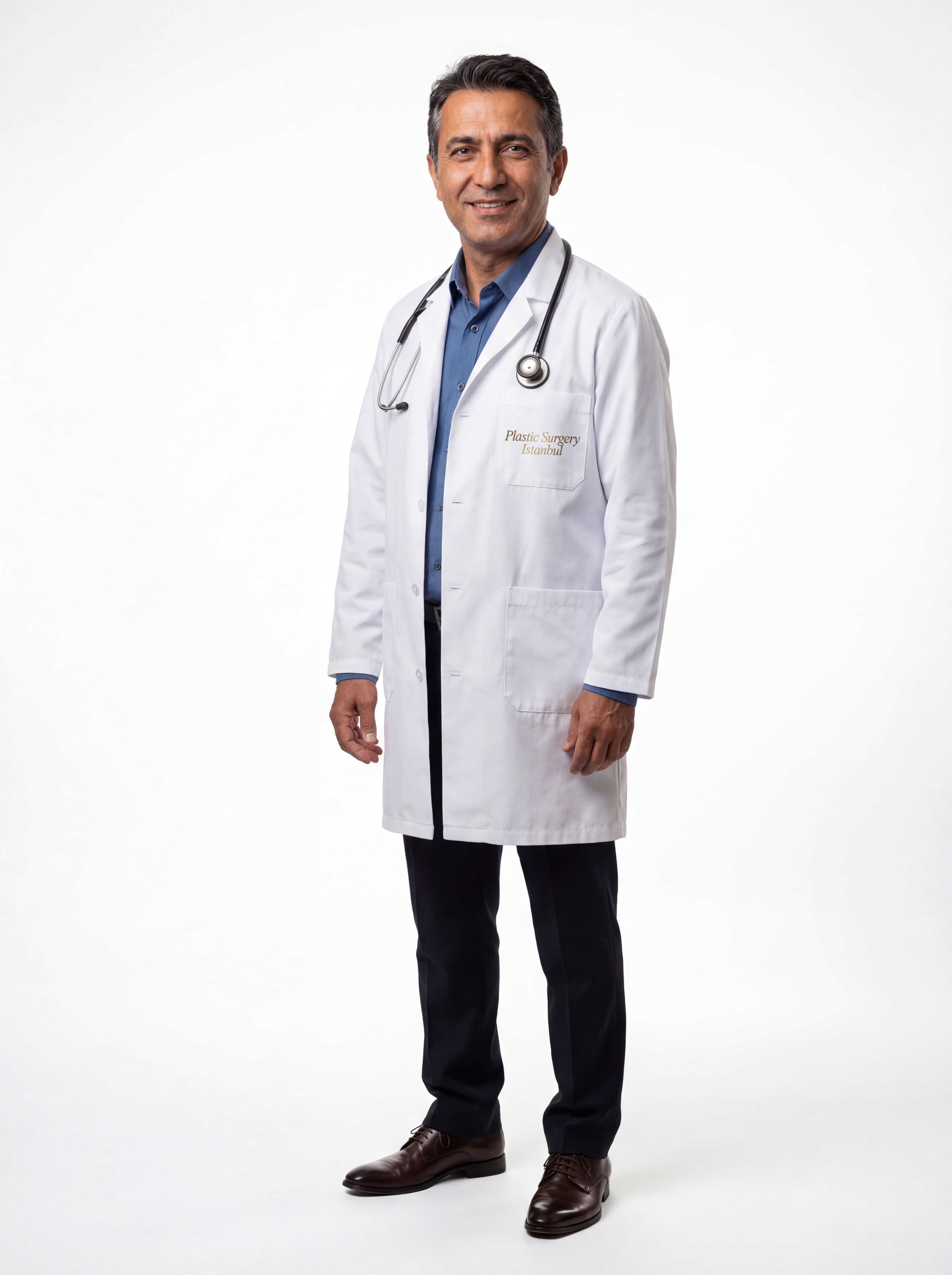
With over 20 years of facial surgery and injectable expertise, Prof. Dr. Uçar performs both surgical blepharoplasty and precision Botox — recommending the approach that genuinely addresses your anatomy.
- ISAPS Member — Global Top 5%
- 20+ Years Facial Surgery Expertise
- Expert in Both Surgery & Injectables
- Sub-2% Complication Rate
- JCI Hospital Affiliation
Your Eye Rejuvenation Journey in Istanbul
Free Online Consultation
Submit your photos and concerns through our secure form. Within 24 hours, Prof. Dr. Uçar reviews your case with 3D facial analysis and recommends whether blepharoplasty, Botox, or a combination approach best addresses your specific anatomy and goals.
Personalized Treatment Plan
You receive a detailed video assessment with technique recommendation, expected results, recovery timeline, and exact all-inclusive pricing. Complete transparency before you commit — no surprises, no hidden costs.
Travel & VIP Coordination
Your dedicated patient coordinator arranges your 5-star Nişantaşı hotel, confirms all appointments, and sends a day-by-day itinerary. VIP airport pickup confirmed 48 hours before arrival.
Day 1: Arrival & Assessment
VIP meet-and-greet at Istanbul Airport, private transfer to your hotel. Comprehensive pre-operative assessment: blood work, ECG, 3D imaging, and face-to-face consultation with Prof. Dr. Uçar at the JCI-accredited hospital.
Day 2: Treatment Day
Blepharoplasty (45–90 min) and/or Botox (10–15 min) performed at the JCI hospital. If combination treatment, Botox may be scheduled 4–6 weeks post-surgery for optimal synergy.
Day 3–7: Recovery in Istanbul
Daily coordinator check-ins, clinic visits for wound assessment. Light sightseeing from Day 4 — explore the Bosphorus, Nişantaşı boutiques, and historic Istanbul. Final examination on Day 7.
12-Month Aftercare Program
Structured video follow-ups at Week 2, Month 1, 3, 6, and 12. If combination treatment was chosen, Botox timing is coordinated at the optimal post-surgical window. Prof. Dr. Uçar personally reviews your progress.
FAQ: Blepharoplasty vs Botox — Your Questions Answered
No — Botox cannot replace blepharoplasty for excess skin, fat bags, or significant eyelid drooping. Botox relaxes muscles to smooth dynamic wrinkles (crow's feet, frown lines); blepharoplasty removes excess tissue. They solve completely different problems. However, Botox can delay the need for blepharoplasty in patients with early dynamic wrinkles and no excess skin.
Related Eyelid Surgery Services
Get Your Free Eye Rejuvenation Consultation
Submit your photos and Prof. Dr. Uçar will recommend whether blepharoplasty, Botox, or a combination approach best addresses your specific concerns — with exact all-inclusive pricing.